Henry Bradbury: Pioneer of Botanical Nature Printing
Henry Bradbury emerged as one of the leading innovators of nineteenth-century nature printing, adapting and refining techniques he had studied in continental Europe to suit the demands of British scientific publishing. By pressing actual plant specimens—such as fronds or leaves—into soft metal plates, he could register even the finest veins, serrations, and surface textures, producing impressions that appeared almost like shadows or ghosts of the plants themselves on the page. This fusion of mechanical precision and sensuous surface detail gave his prints a distinctly aesthetic character: they were not only accurate botanical records but also compelling visual objects that invited close, almost tactile viewing.
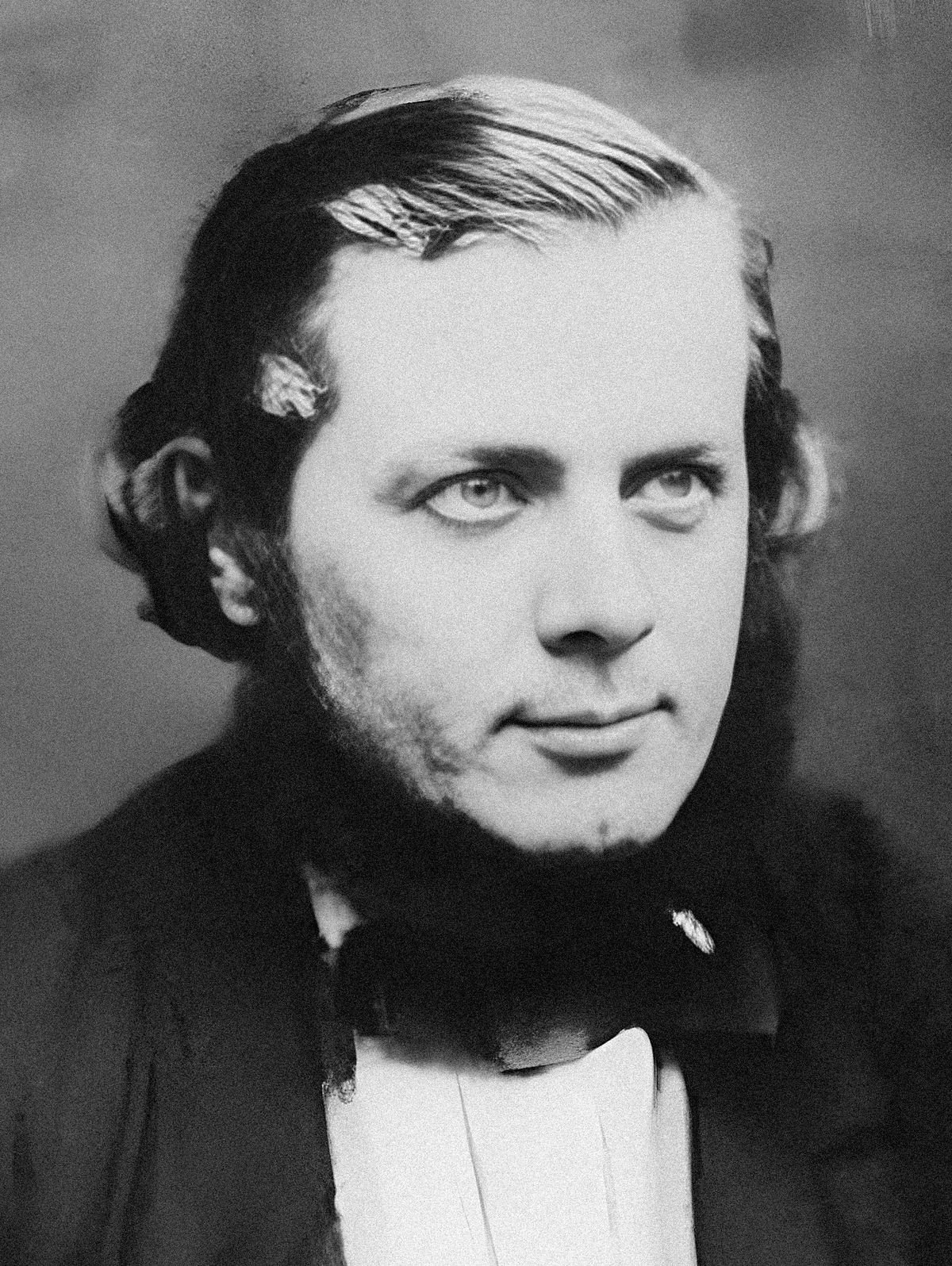
Henry Riley Bradbury, 1829–1860 [1]↓
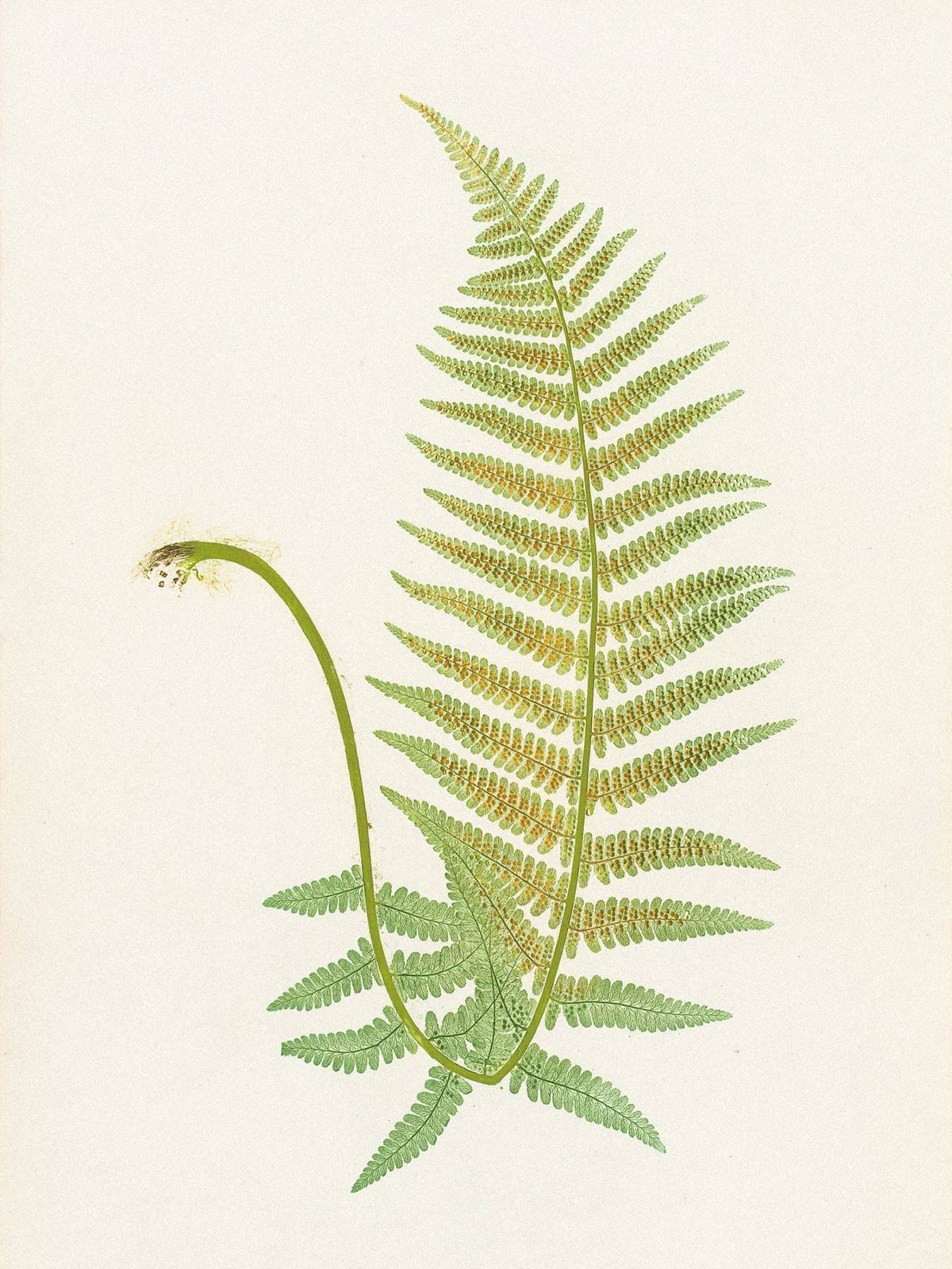
Filix-mas, Henry Bradbury, The Ferns of Great Britain and Ireland, Plate XIV, 1855 [2]↓
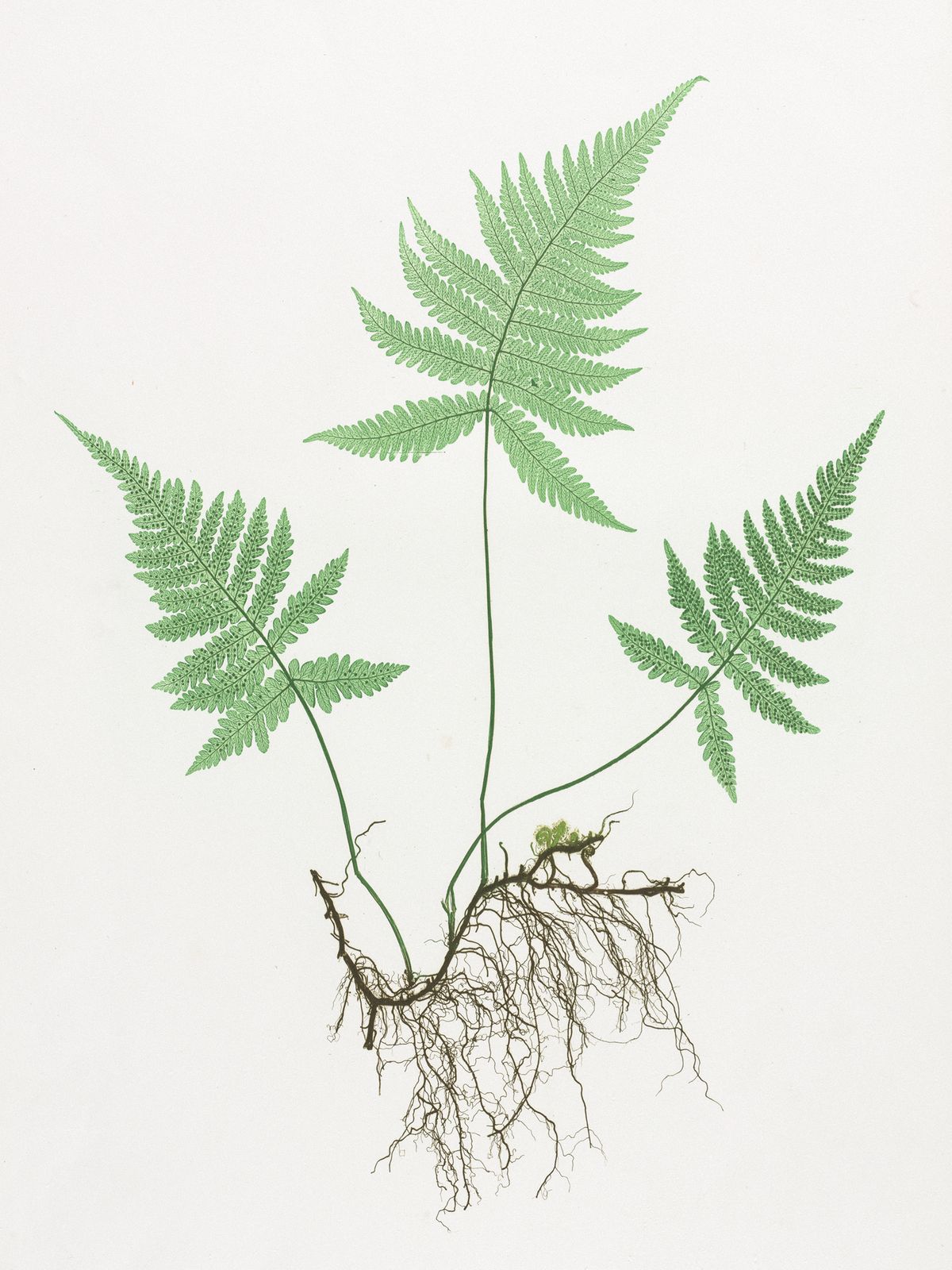
Polypodium Phegopteris, Henry Bradbury, The Ferns of Great Britain and Ireland, Plate IV, 1855 [2]↓
Bradbury’s collaboration with the botanist Thomas Moore on The Ferns of Great Britain and Ireland (1855) marks the first major culmination of this visually driven nature-printing practice. In this work, carefully chosen and pressed fern fronds generated plates that preserved the plants’ true scale, outline, and venation, so that the printed images strongly recalled mounted herbarium specimens while adding the depth of ink and, in many copies, delicate hand-colouring. The resulting pages have a pronounced visual rhythm: pale fronds poised against the paper, their filigree of veins and finely cut pinnae forming almost ornamental patterns, which made the book as much an art object for Victorian fern enthusiasts as a reliable tool for scientific identification.
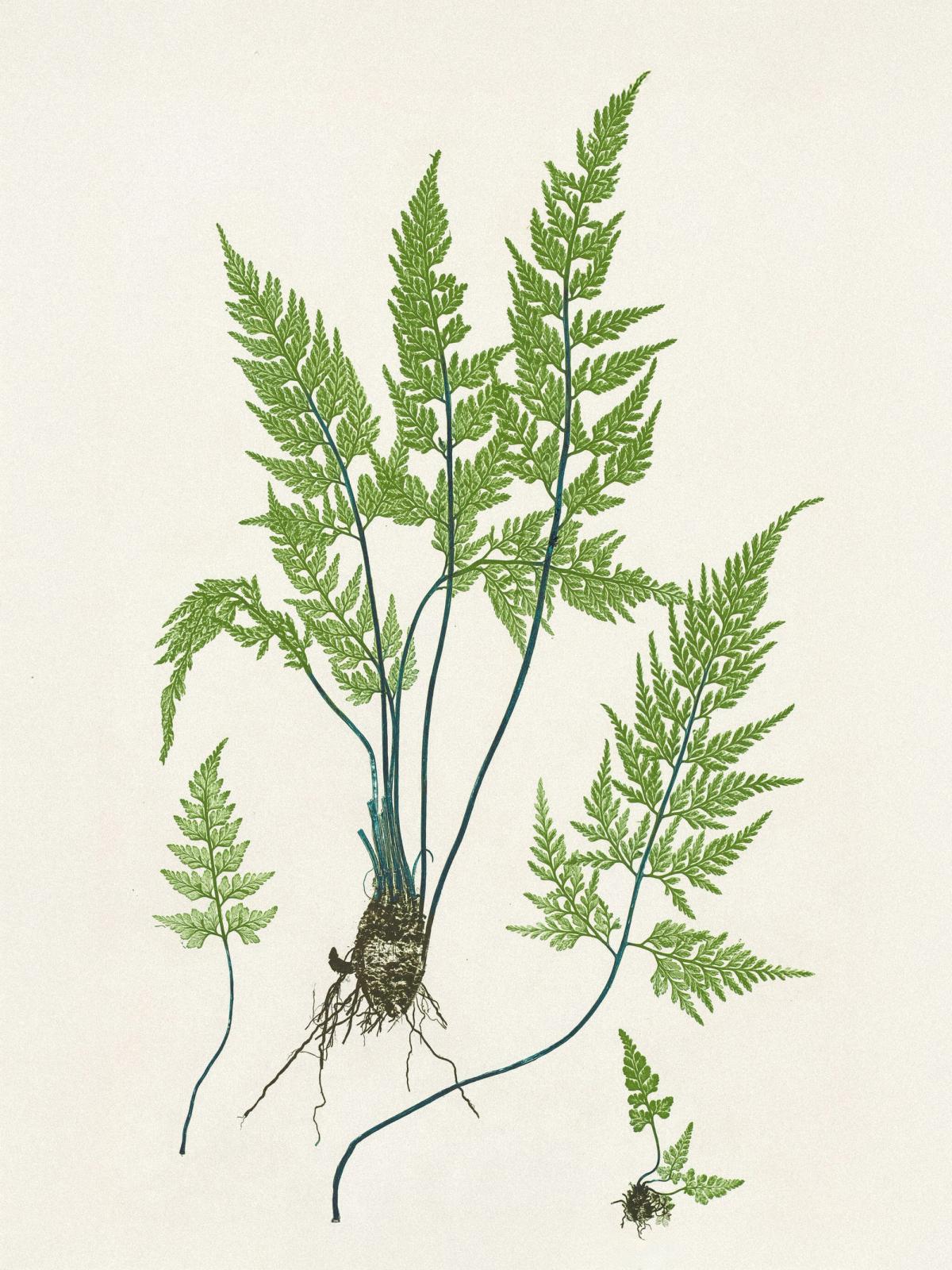
Asplenium adiantum-nigrum, Asplenium adiantum-obtusum, Henry Bradbury, The Ferns of Great Britain and Ireland, Plate XXXVI, 1855 [2]↓
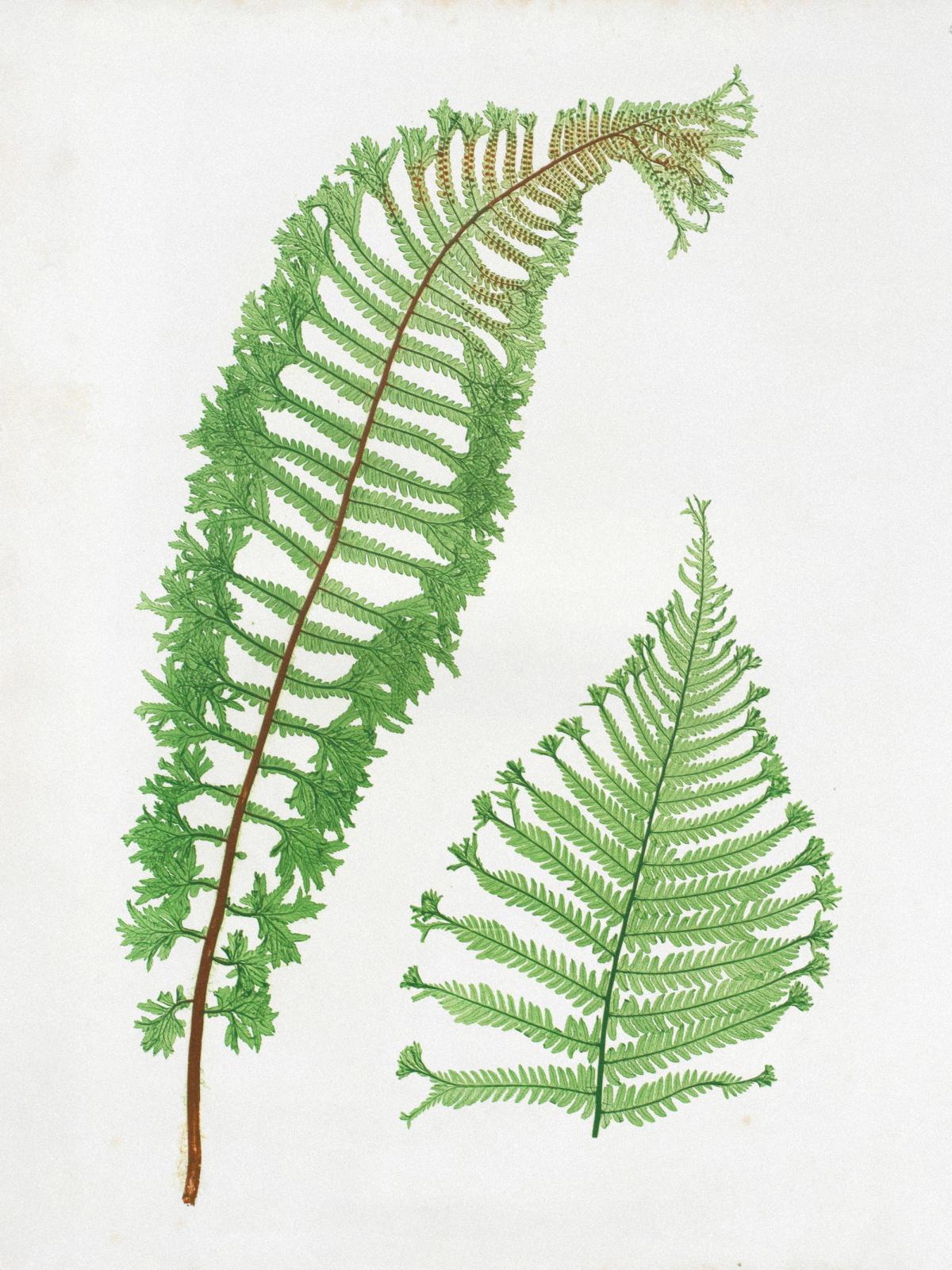
Lastrea Filix-mas cristata, Lastrea Filix-mas polydactyla, Henry Bradbury, The Ferns of Great Britain and Ireland, Plate XVI, 1855 [2]↓
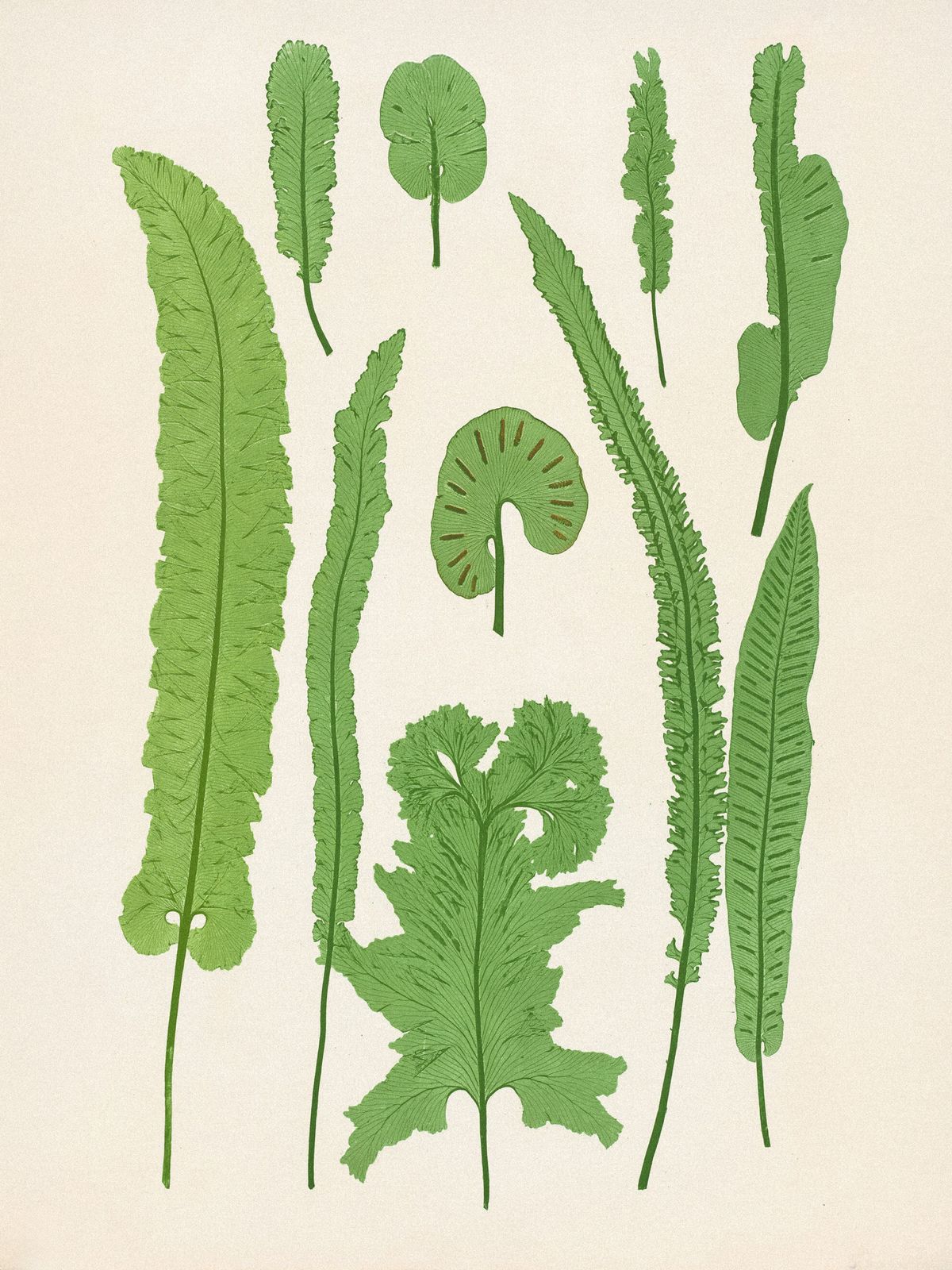
Scolopendrium vulgare, Henry Bradbury, The Ferns of Great Britain and Ireland, Plate XLII, 1855 [2]↓
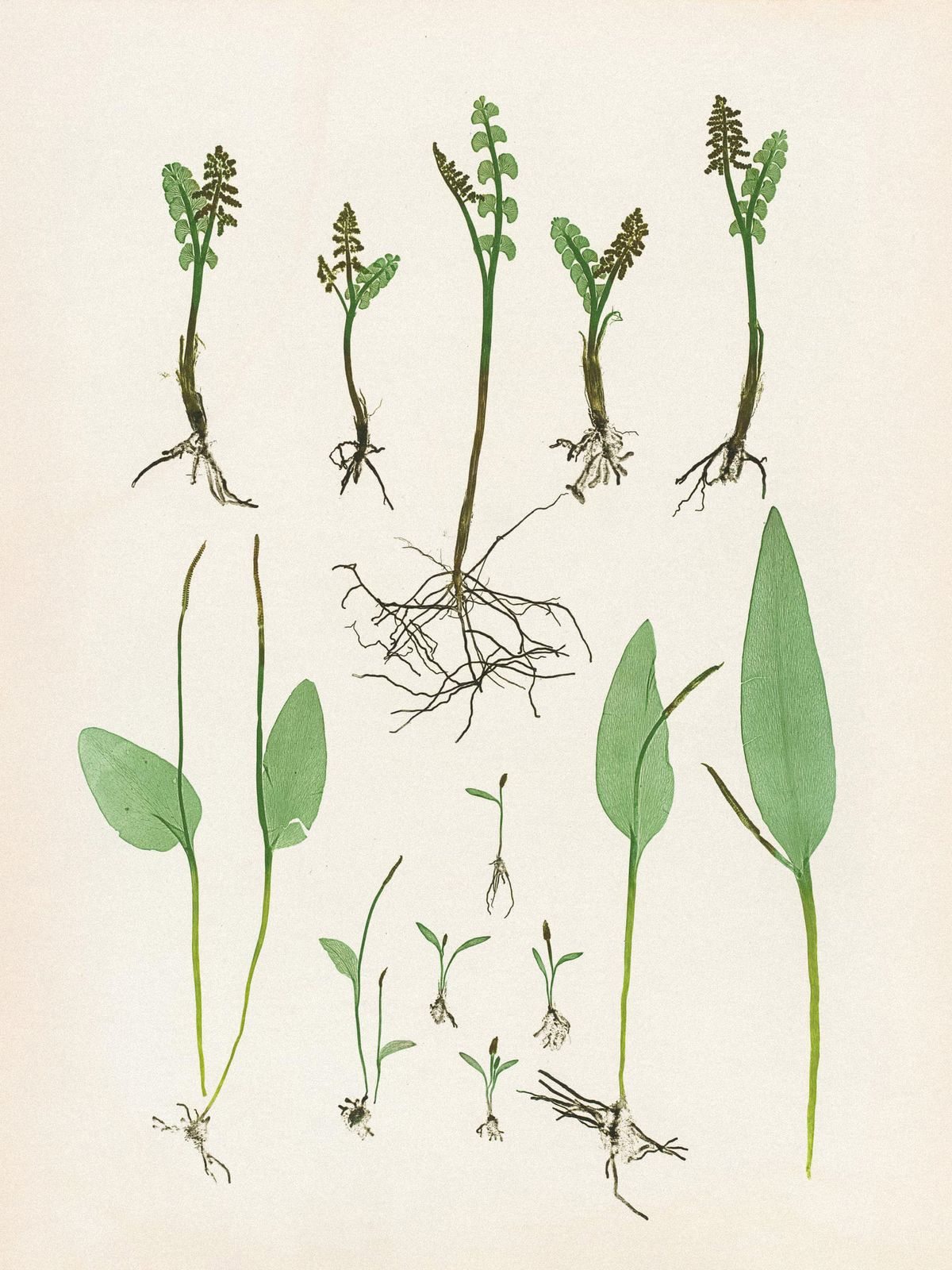
Botrychium lunaria, Ophioglossum vulgatum, Ophioglossum lusitanicum, Henry Bradbury, The Ferns of Great Britain and Ireland, Plate LI, 1855 [2]↓
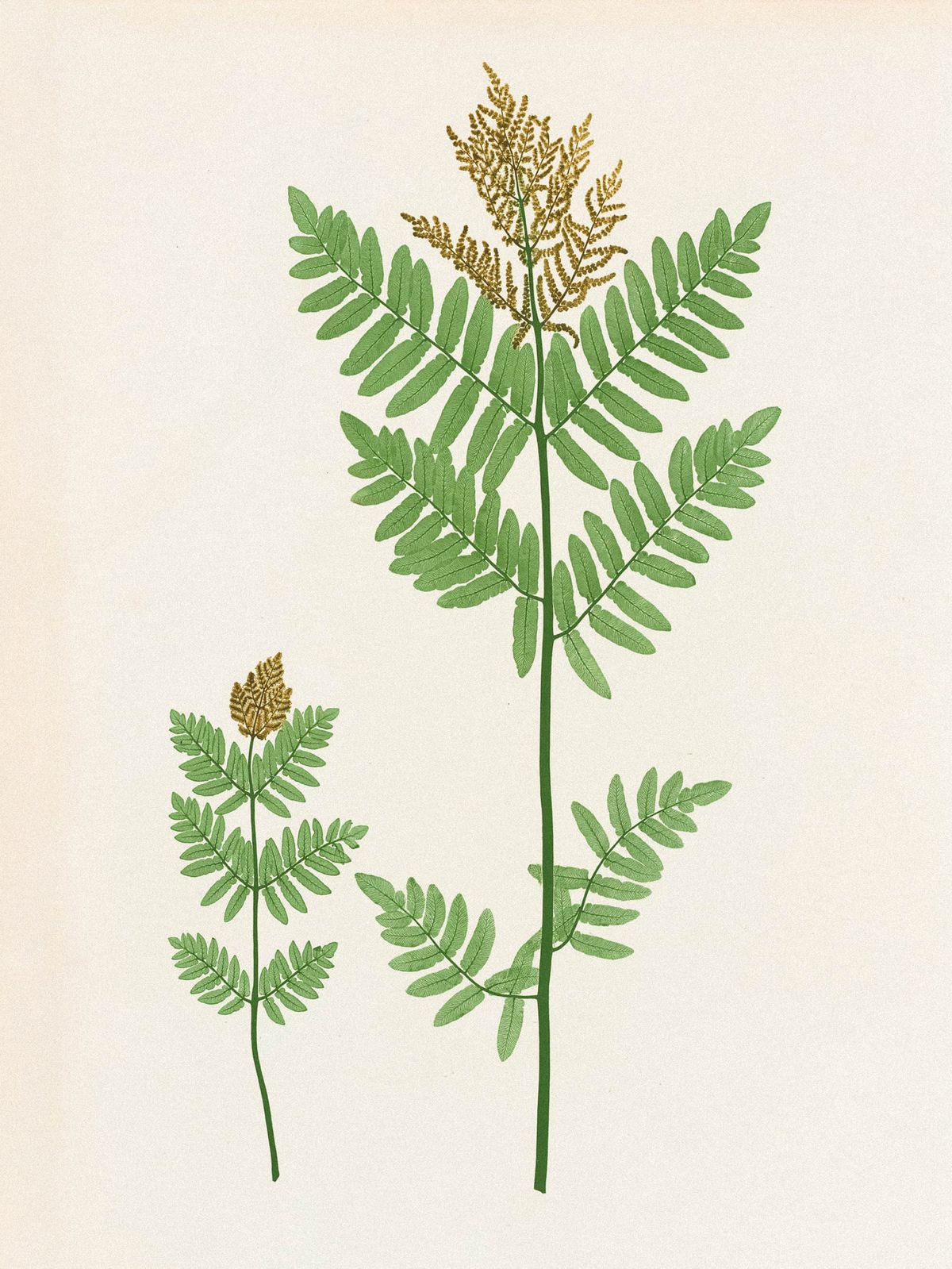
Osmunda regalis, Henry Bradbury, The Ferns of Great Britain and Ireland, Plate L, 1855 [2]↓
The same emphasis on visual effect shaped Bradbury’s later contribution to The Nature-Printed British Sea-Weeds (1859–1860), where the translucent, ribbon-like and feathery forms of marine algae lent themselves to particularly compelling nature prints. Pressed into metal plates, these specimens produced crisp silhouettes and subtle tonal variations that, once printed and coloured, evoked the watery translucency and flowing movement of living seaweeds while still presenting clear diagnostic features. In this marine context, Bradbury’s technique created pages that read almost like underwater tableaux: intricate, floating arrangements of fronds and branches that appealed to collectors and connoisseurs as decorative compositions, even as they served botanists as precise visual records of British seaweed diversity.
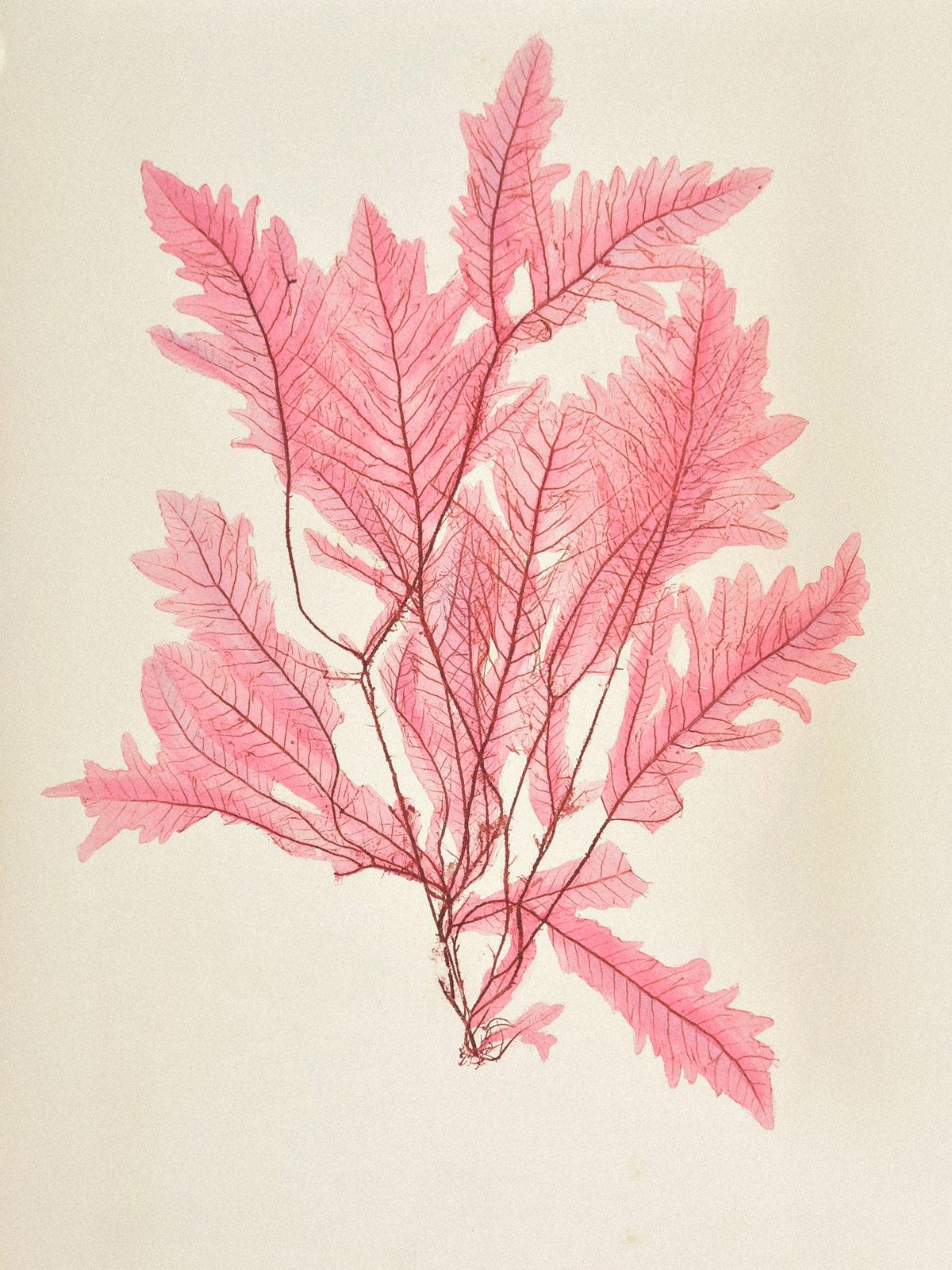
Delesseria Sinuosa Lamour, Henry Bradbury, The nature-printed British sea-weeds, Plate XLV, 1859-1860 [3]↓
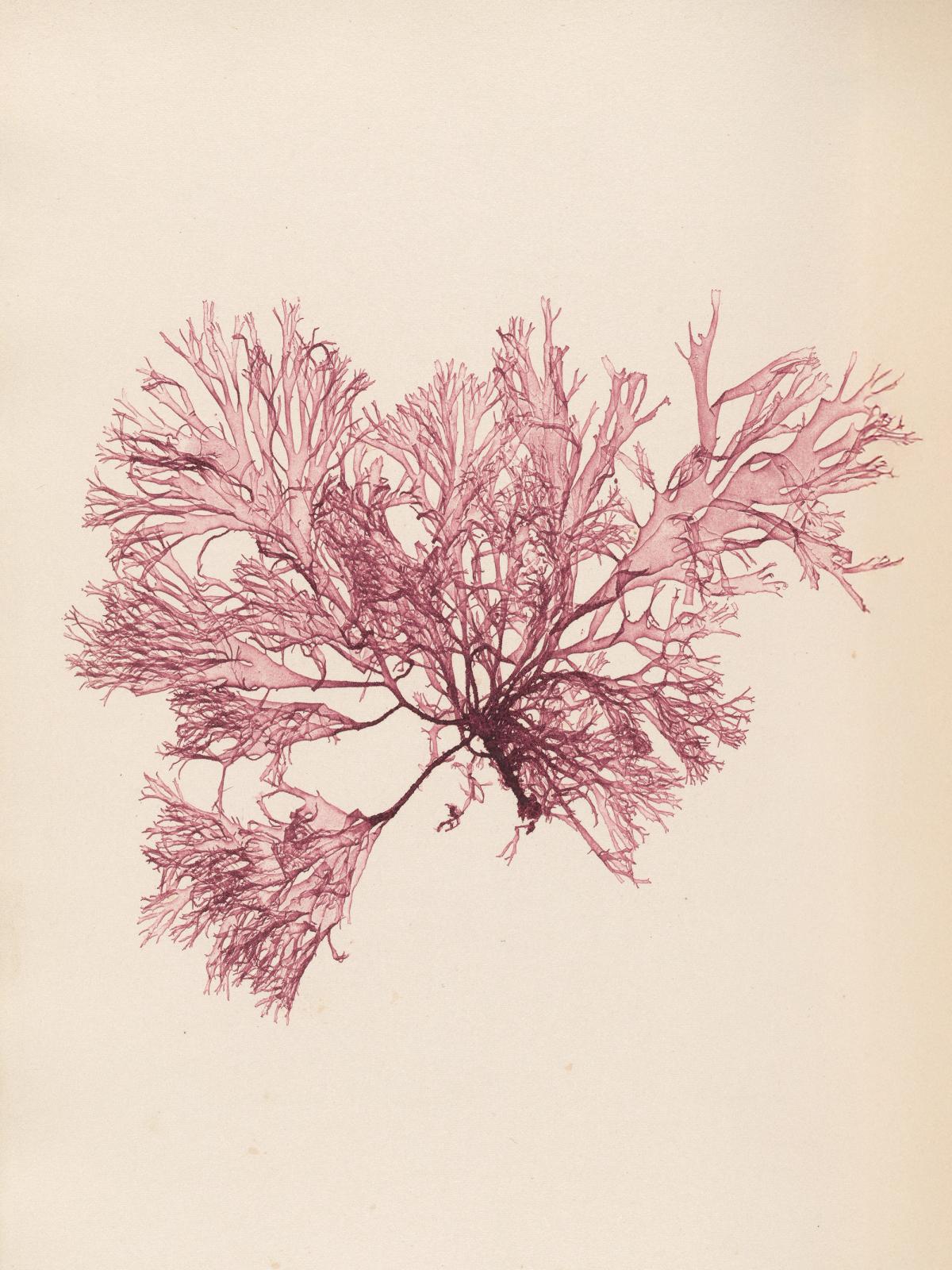
Rhodymenia palmata, Henry Bradbury, The nature-printed British sea-weeds, Plate LXX, 1859-1860 [3]↓
Sources
- [1] Portrait of Henry Bradbury, Photo: Geldscheine-Online[Link](accessed: 2/21/2026)↑
- [2] The ferns of Great Britain and Ireland; London; Bradbury and Evans; Whitefriars; 1855, Thomas Moore, Henry Bradbury, John Lindley; Biodiversity Heritage Library[Link](accessed: 1/31/2026)↑
- [3] The nature-printed British sea-weeds : a history, accompanied by figures and dissections of the Algae of the British Isles; London Bradbury and Evans 1859-1860, William Grossart Johnstone, Alexander Croall, Henry Bradbury; Biodiversity Heritage Library[Link]↑