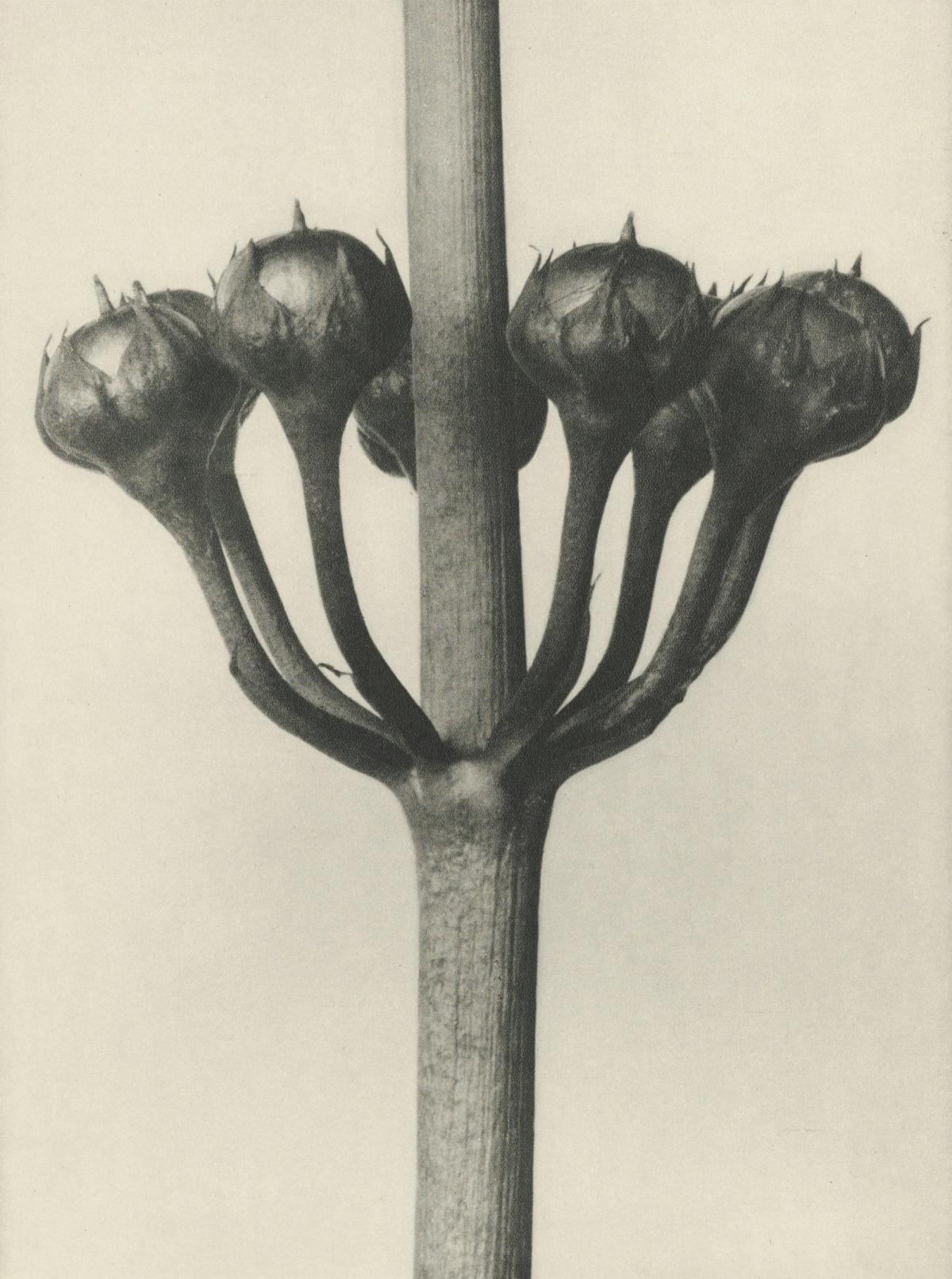
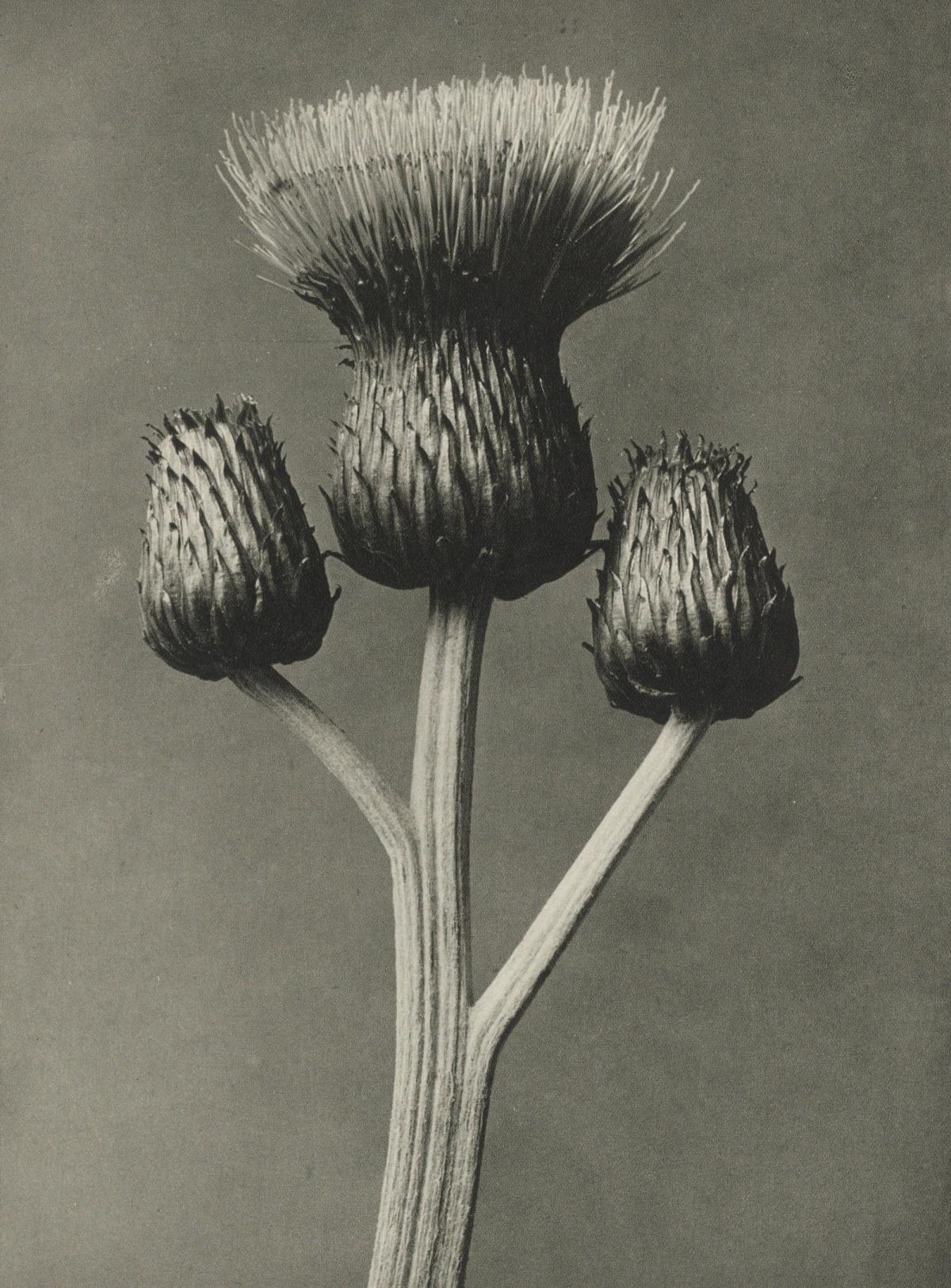
Karl Blossfeldt: Natural design archetypes
Karl Blossfeldt (1865–1932) was a German sculptor and self-taught photographer renowned for his meticulous close-up studies of plants, which revealed their sculptural forms and intricate patterns as archetypes for design.
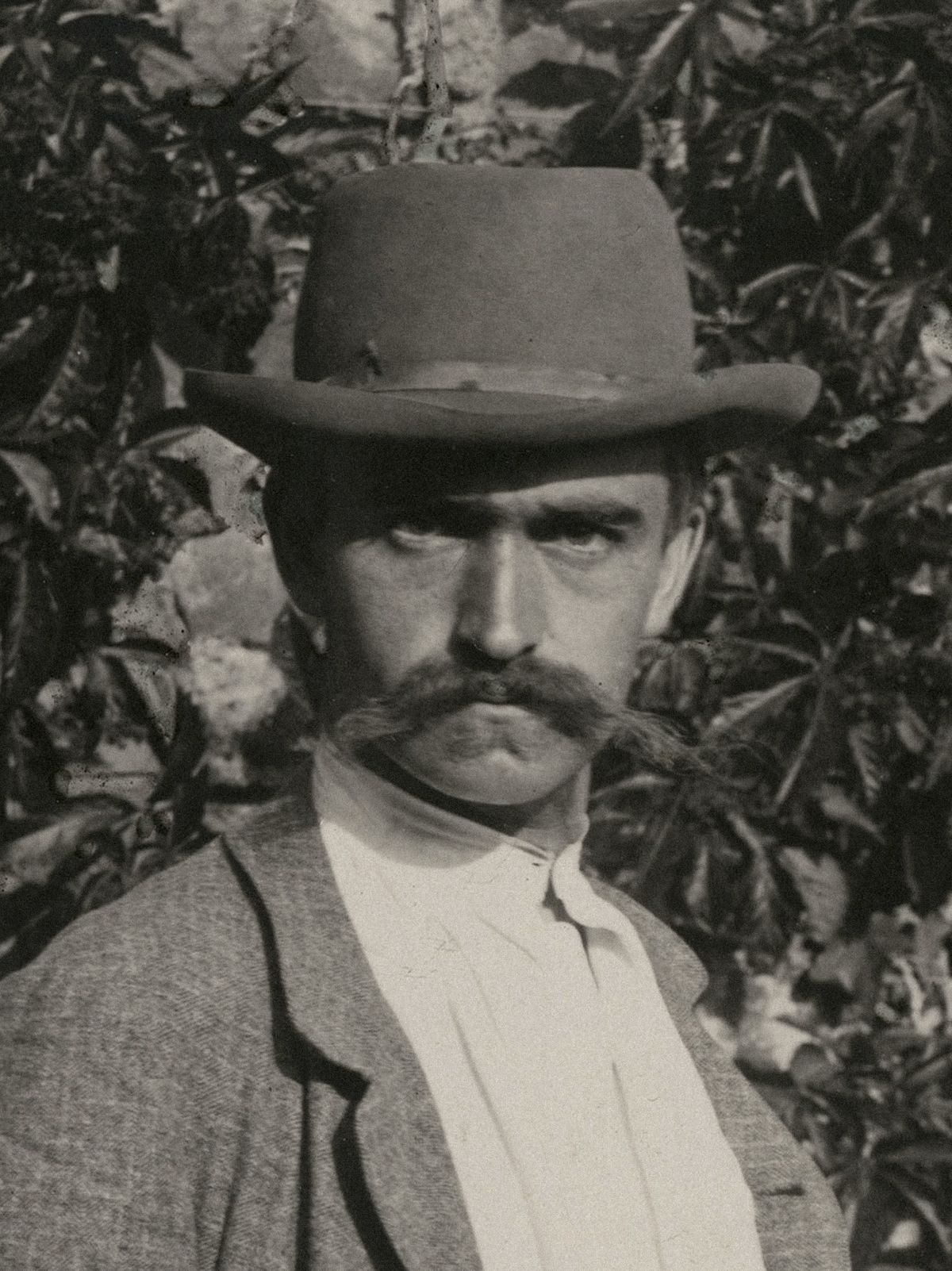
Karl Blossfeldt, Self-portrait in Rome, 1895 [1]↓
Initially trained in iron casting and sculpture, Blossfeldt worked under Moritz Meurer in the 1890s, photographing botanical specimens across Europe and North Africa to create reference casts for ornamental art; he later refined custom cameras with lenses magnifying subjects up to 30 times, enabling unprecedented detail on plain backgrounds that isolated textures, symmetries, and growth structures. As a professor at Berlin’s Kunstgewerbeschule from 1898, he built a teaching archive of ~6,000 images, using photography to demonstrate nature’s formal principles to students of applied arts.
His 1928 book Urformen der Kunst (“Art Forms in Nature”) brought public acclaim at age 63, showcasing stark black-and-white plates where thistle spines resemble ironwork, thorn clusters evoke capitals, and seed heads mirror architectural motifs—bridging botany, science, and modernist design in the New Objectivity style. Blossfeldt’s work preserves ephemeral plant life as durable typologies, influencing surrealism, Bauhaus, and contemporary macro photography by proving nature’s forms as inexhaustible sources for human creativity.
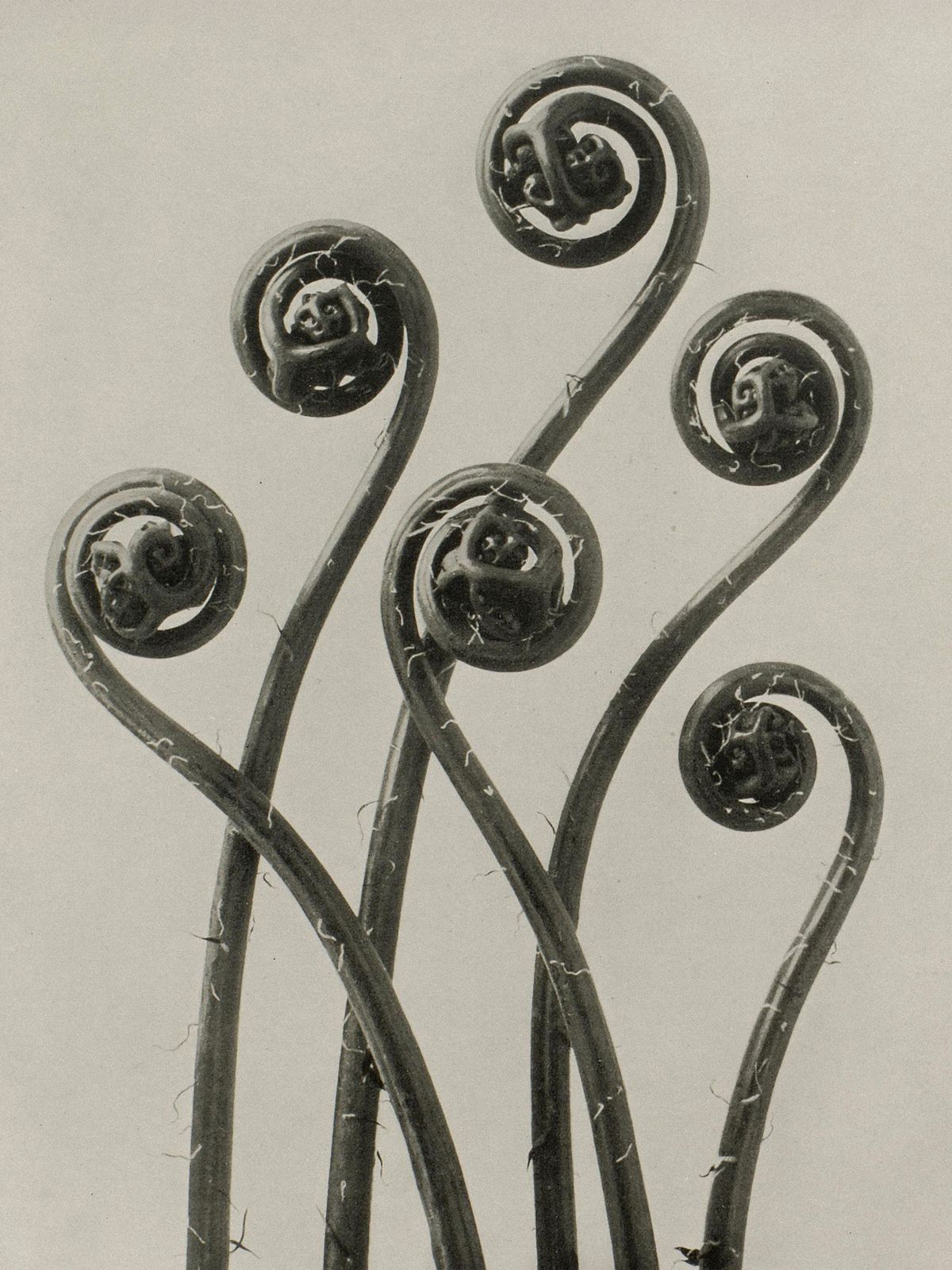
Adiantum pedatum 12x, Urformen der Kunst, 1928 [2]↓
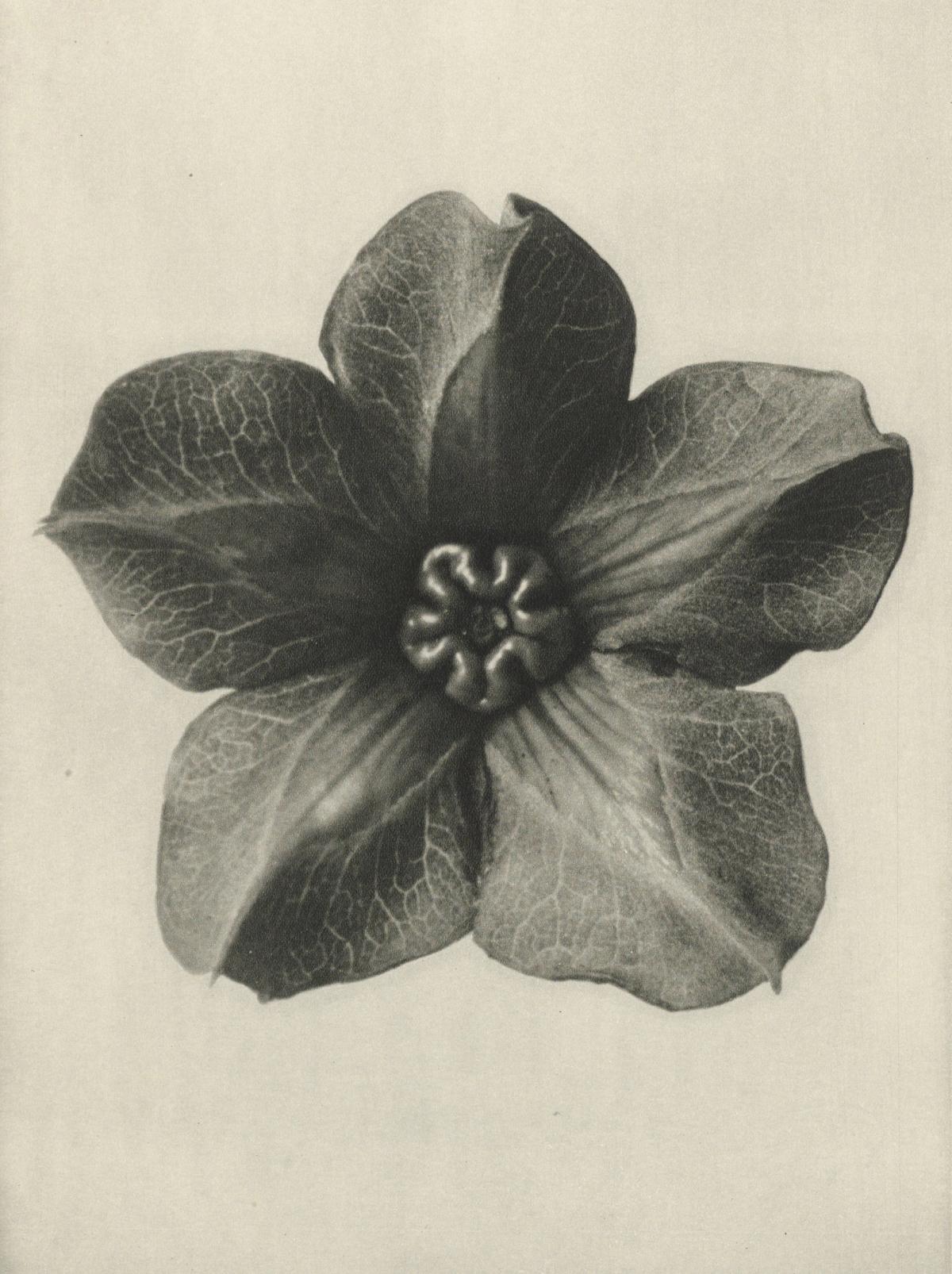
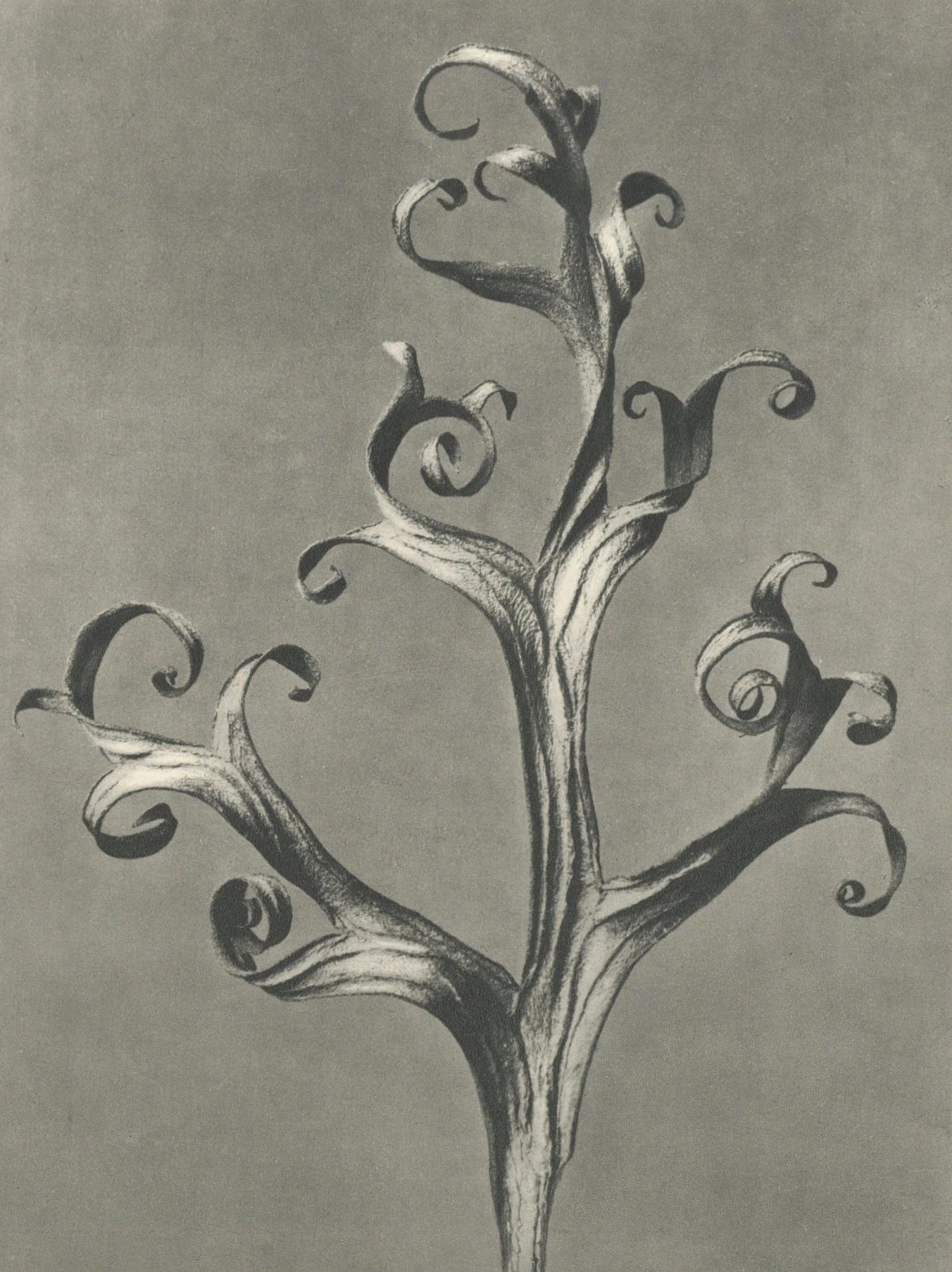
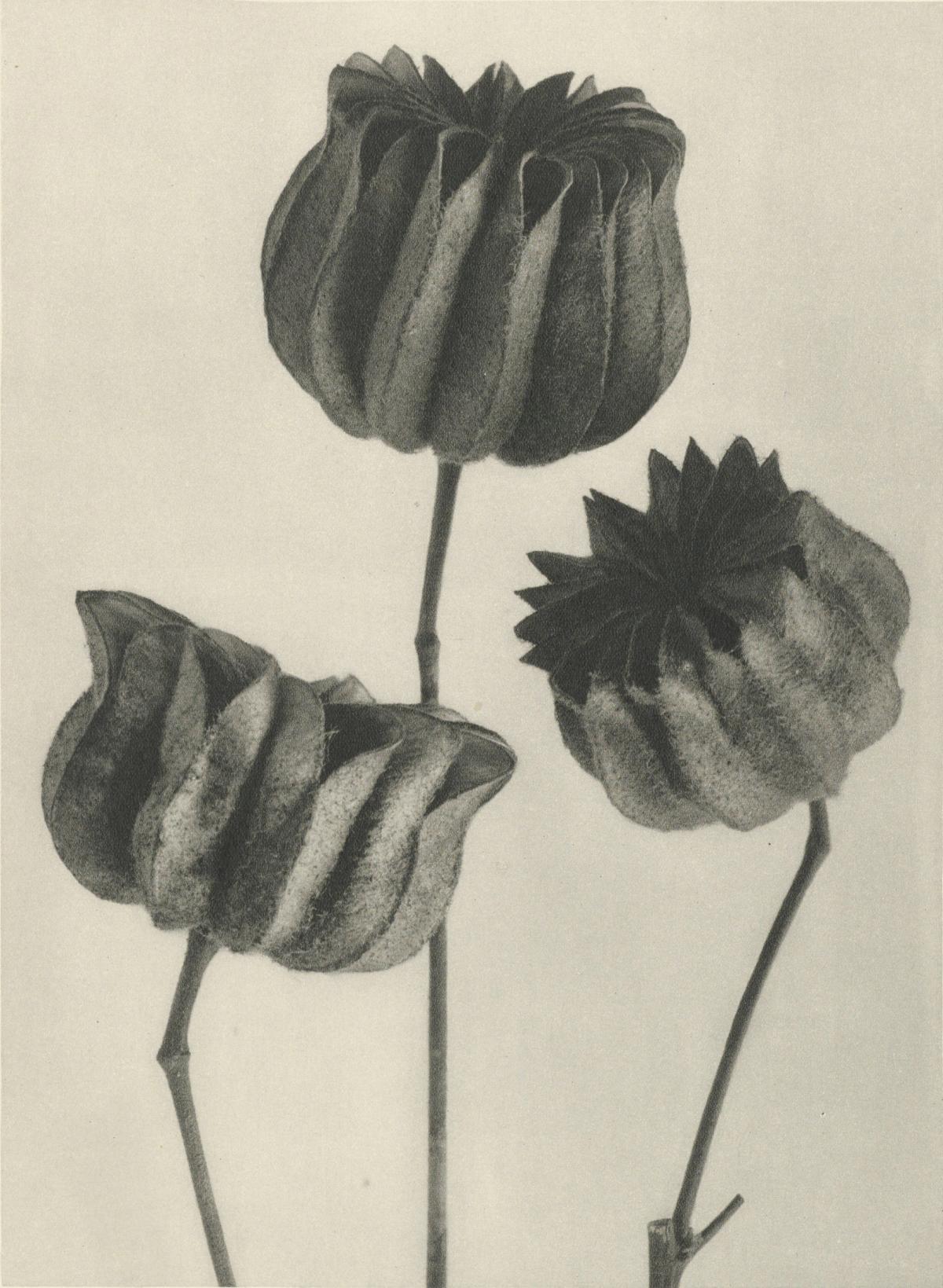
Abutilon, Urformen der Kunst, 1928 [2]↓
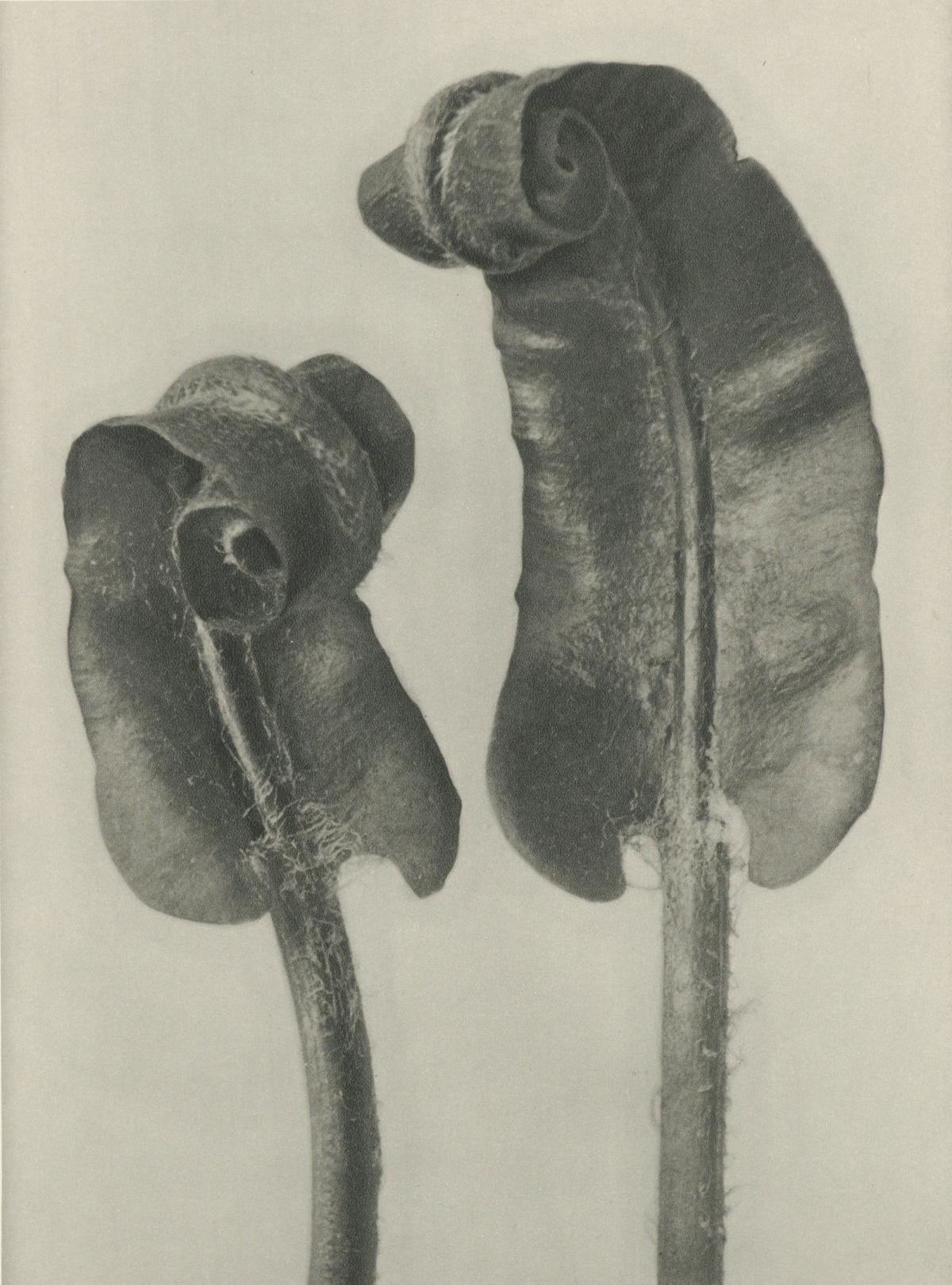
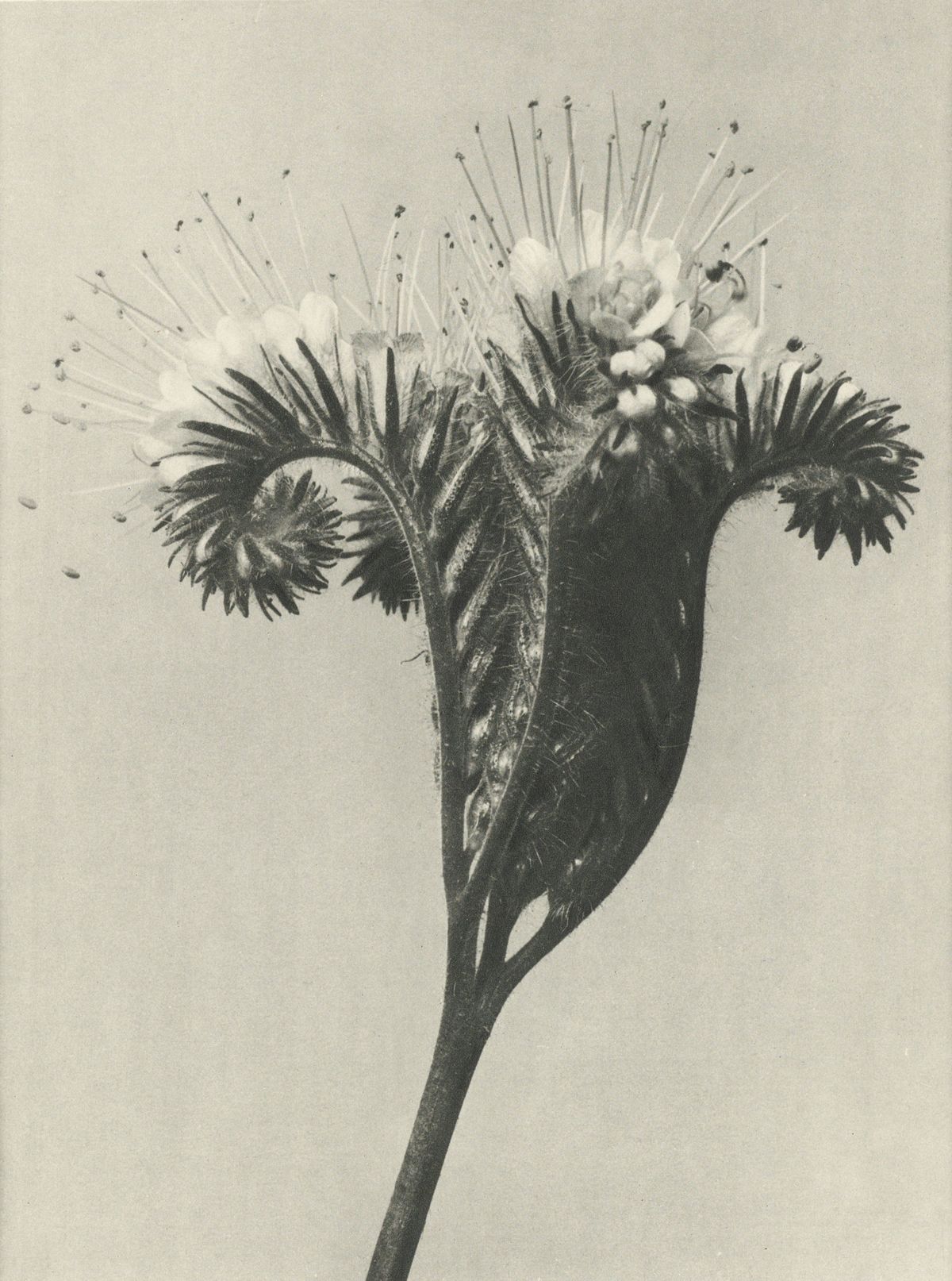
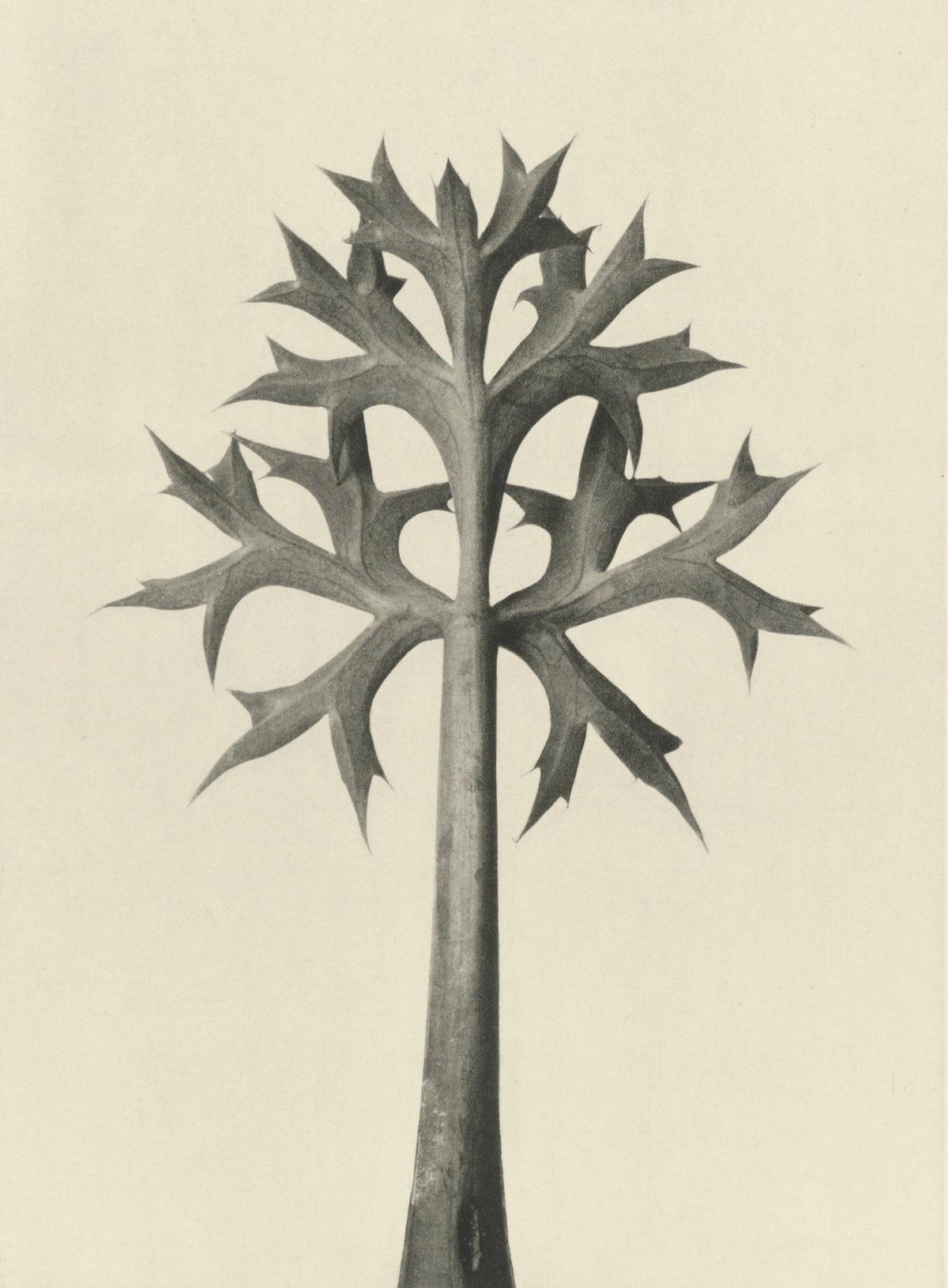
Eryngium bourgatii 5x, Urformen der Kunst, 1928 [2]↓
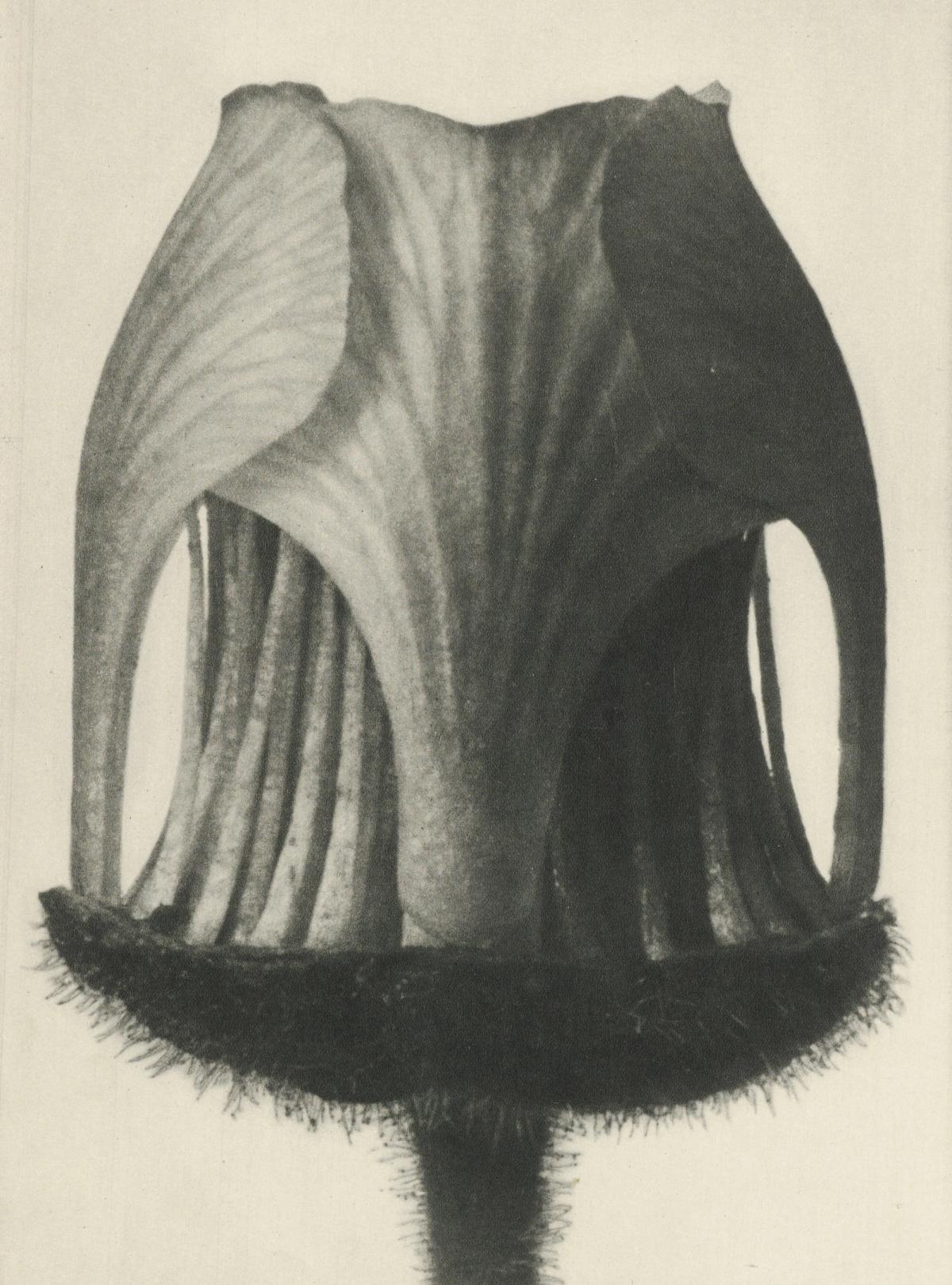
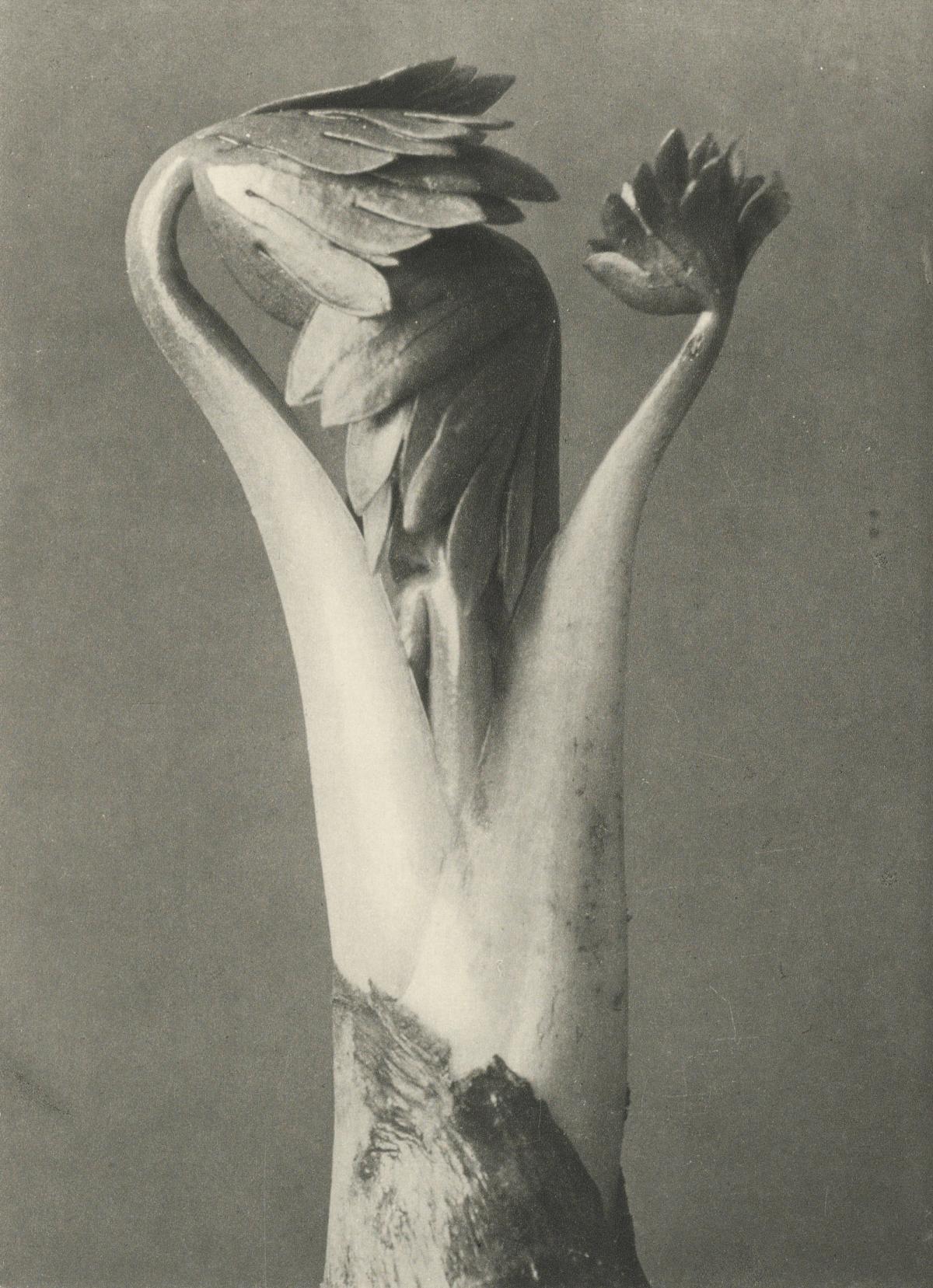
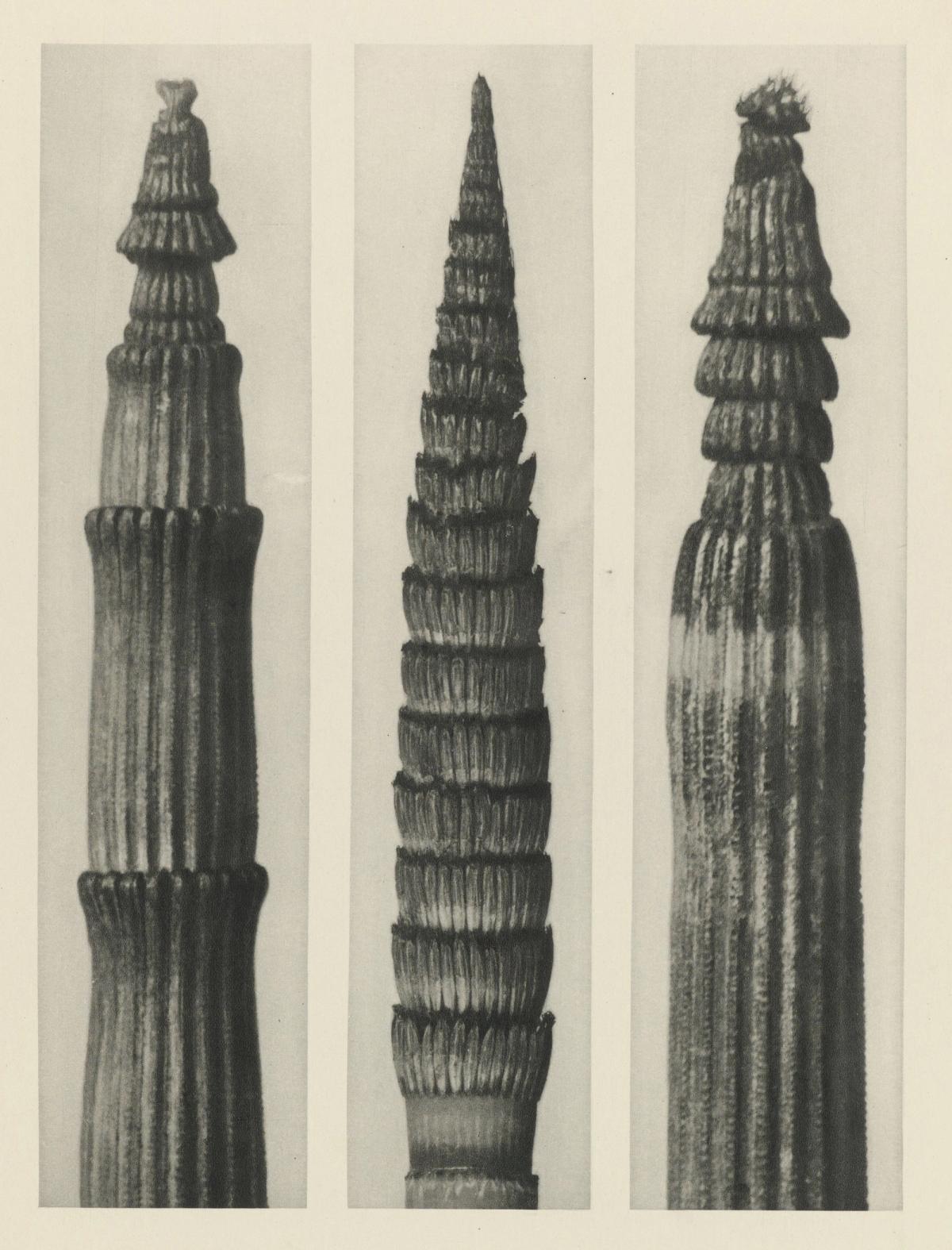
Equisetum hyemale 12x, Equisetum majus 4x, Equisetum hyemale 18x, Urformen der Kunst, 1928 [2]↓