Pierre-Joseph Redouté: Botanical illustrations
Pierre-Joseph Redouté (1759–1840) transformed botanical illustration into high art through watercolor studies of living plants, capturing their luminous textures and precise morphology for both scientific and aesthetic purposes. Known as the "Raphael of flowers," he served elite patrons from Marie Antoinette to Empress Joséphine while collaborating with botanists like L'Héritier, producing over 2,100 plates of 1,800+ species that remain standards for plant identification and decorative inspiration.
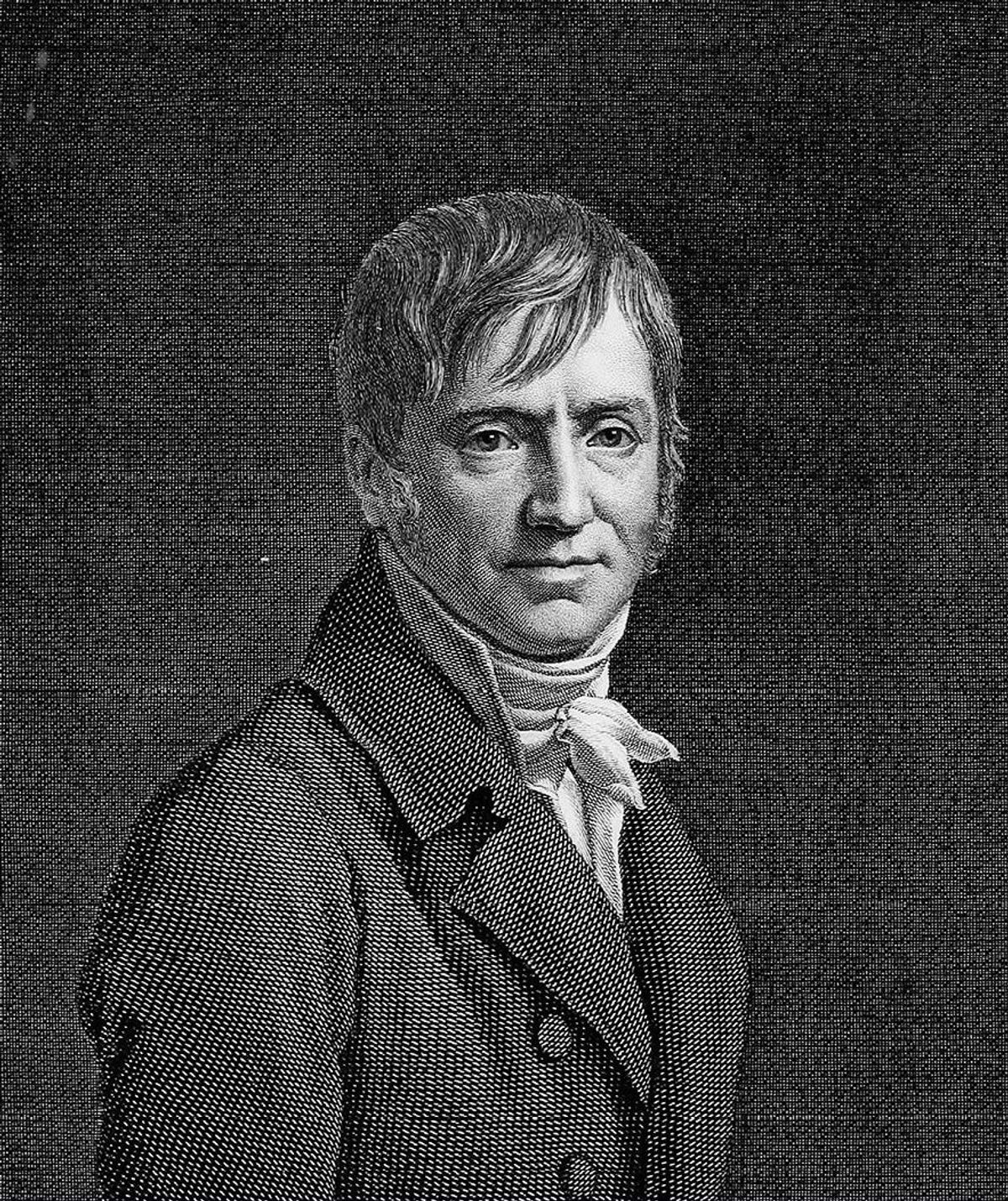
Pierre-Joseph Redouté, 1759-1840 [1]↓
Redouté worked closely with botanists like Charles-Louis L’Héritier de Brutelle and Étienne Ventenat, who supplied living specimens from royal gardens or expeditions, allowing him to paint directly from fresh plants in studio settings rather than dried herbarium sheets—often positioning blooms at eye level under natural light to study subtle color gradients and structural curves. His watercolor technique layered translucent washes for depth, then employed pointillé (stipple engraving) by skilled printers like Langlois, where thousands of tiny dots built form and hue without outlines, ensuring exceptional color fidelity and print longevity across large editions.
La botanique de J.J. Rousseau illustrates 71 plants referenced in Rousseau’s writings, rendered as elegant, single-subject watercolors paired with the philosopher’s observational texts from his botanical letters.
Specimens appear as solitary studies—often a flowering stem or dissected parts—painted from fresh material to match Rousseau’s field descriptions, with simplified backgrounds and restrained color palettes emphasizing natural simplicity. The stipple engravings retain delicate transparency in petals and precise anther details, creating pages that read as visual annotations to Rousseau’s accessible Linnaean method.
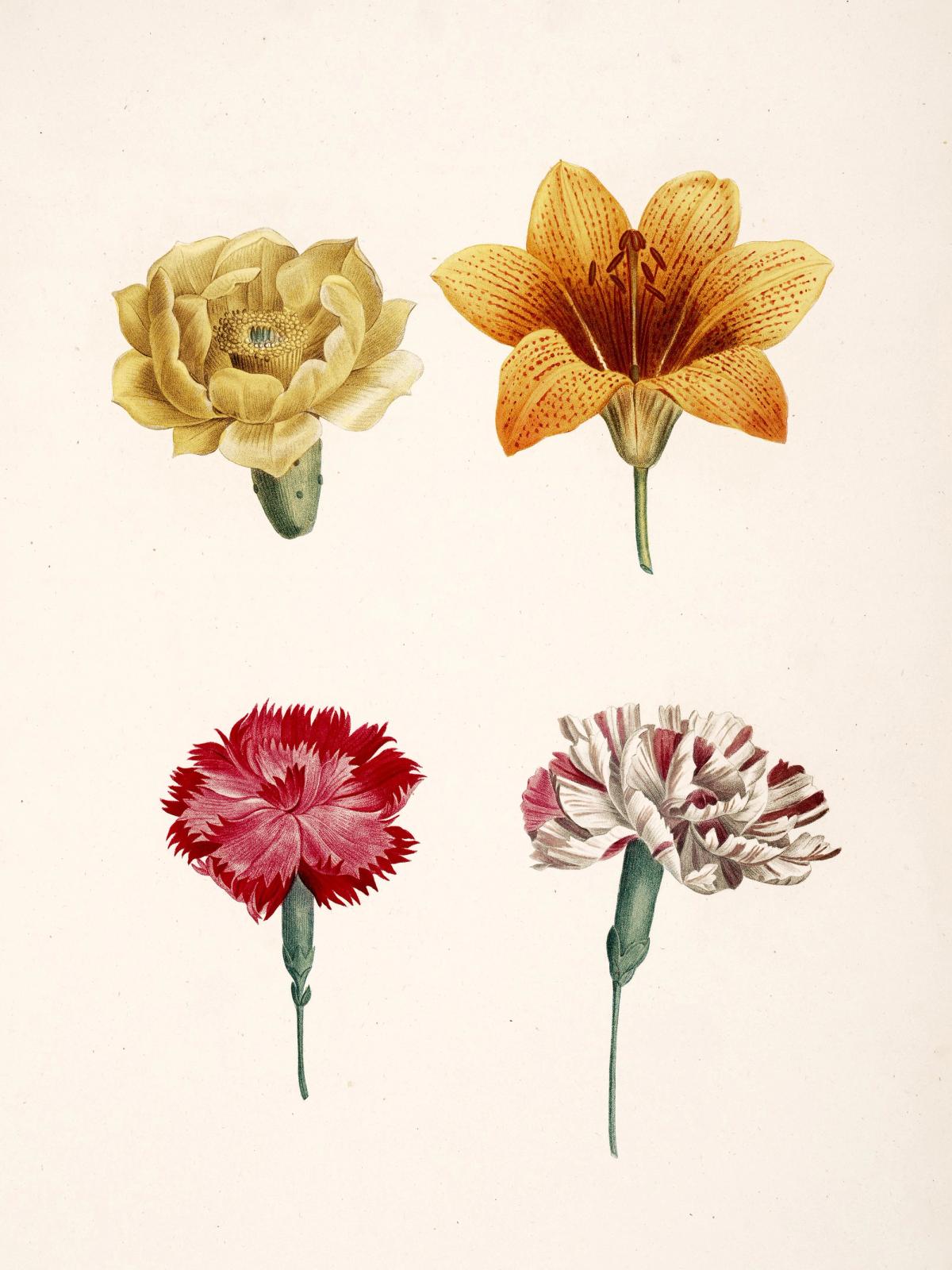
Pierre-Joseph Redouté, La Botanique de J.J. Rousseau, 1805 [2]↓
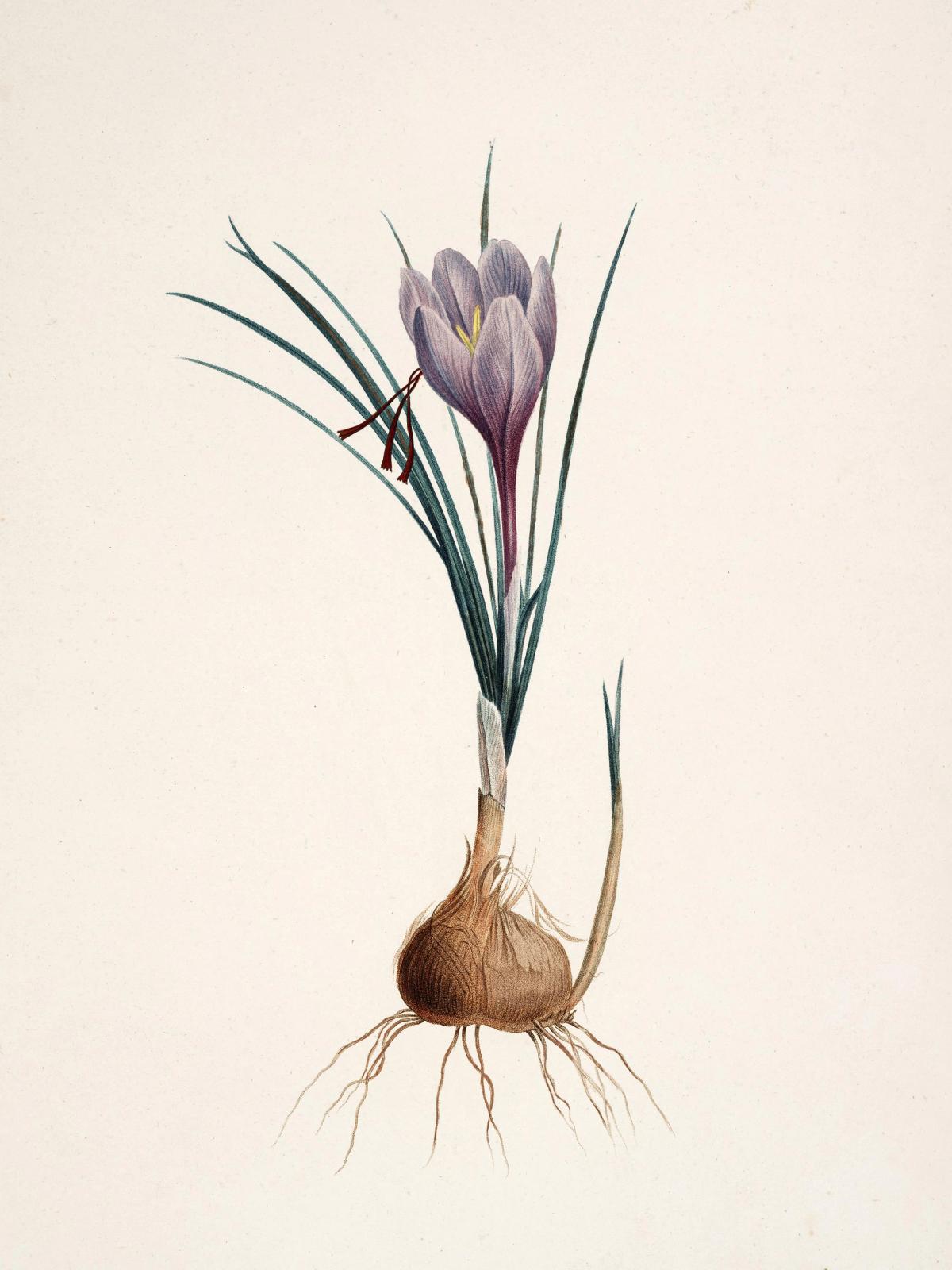
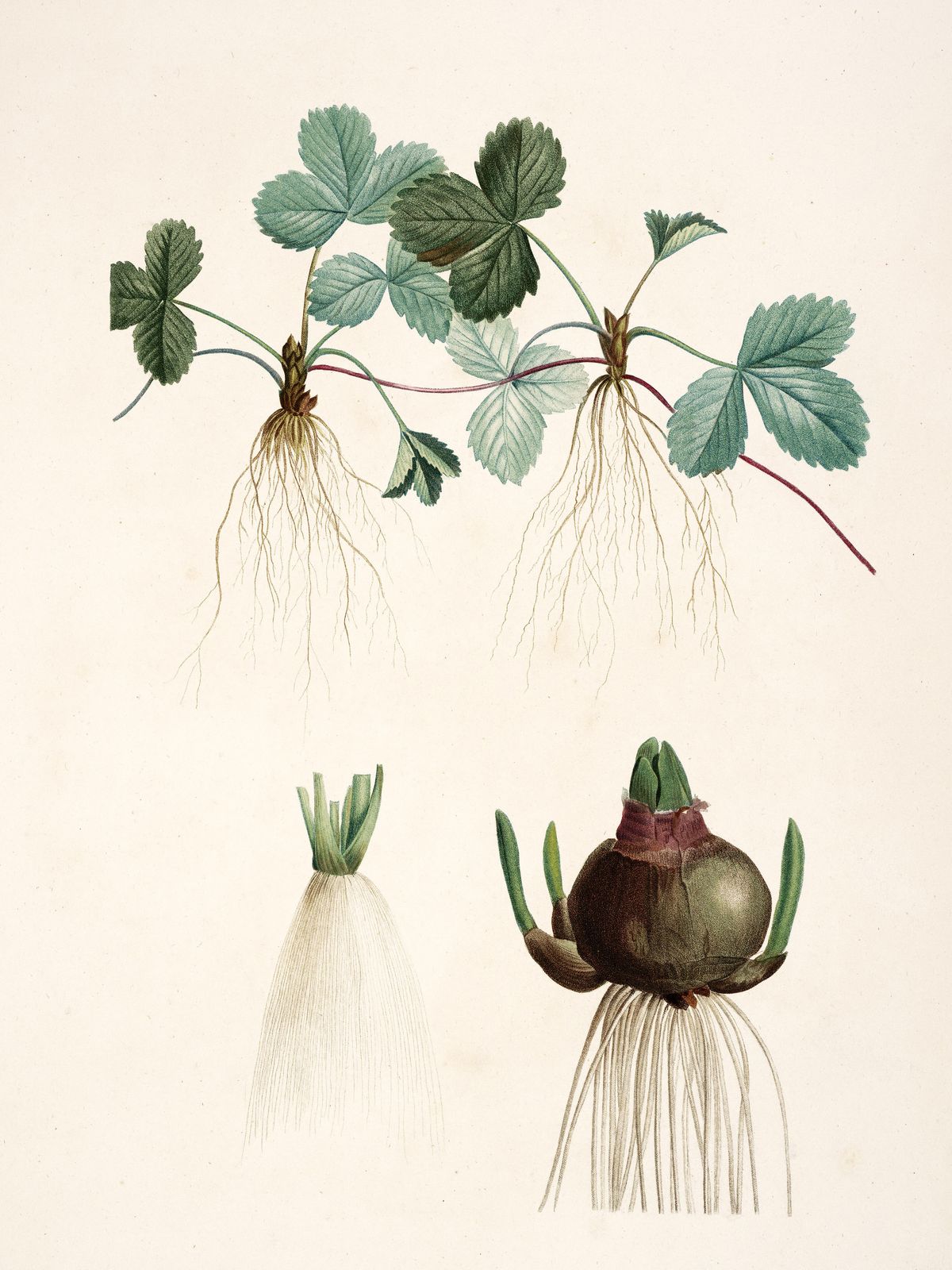
Les Liliacées spans eight volumes with 500+ hand-colored stipple engravings of lily-like plants, showcasing botanical diversity from European natives to exotic introductions in precise, multi-part compositions.
Distinct from the intimate portraits of Les Roses, this series emphasizes systematic completeness: full plants with bulbs, stems, leaves, and flowers fill each plate, rendered with analytical clarity to reveal floral morphology, anther shapes, and growth habits, painted from living specimens under controlled studio light. The expansive scale and layered stipple technique yield luminous depth and textural finesse, prioritizing encyclopedic documentation over singular elegance.
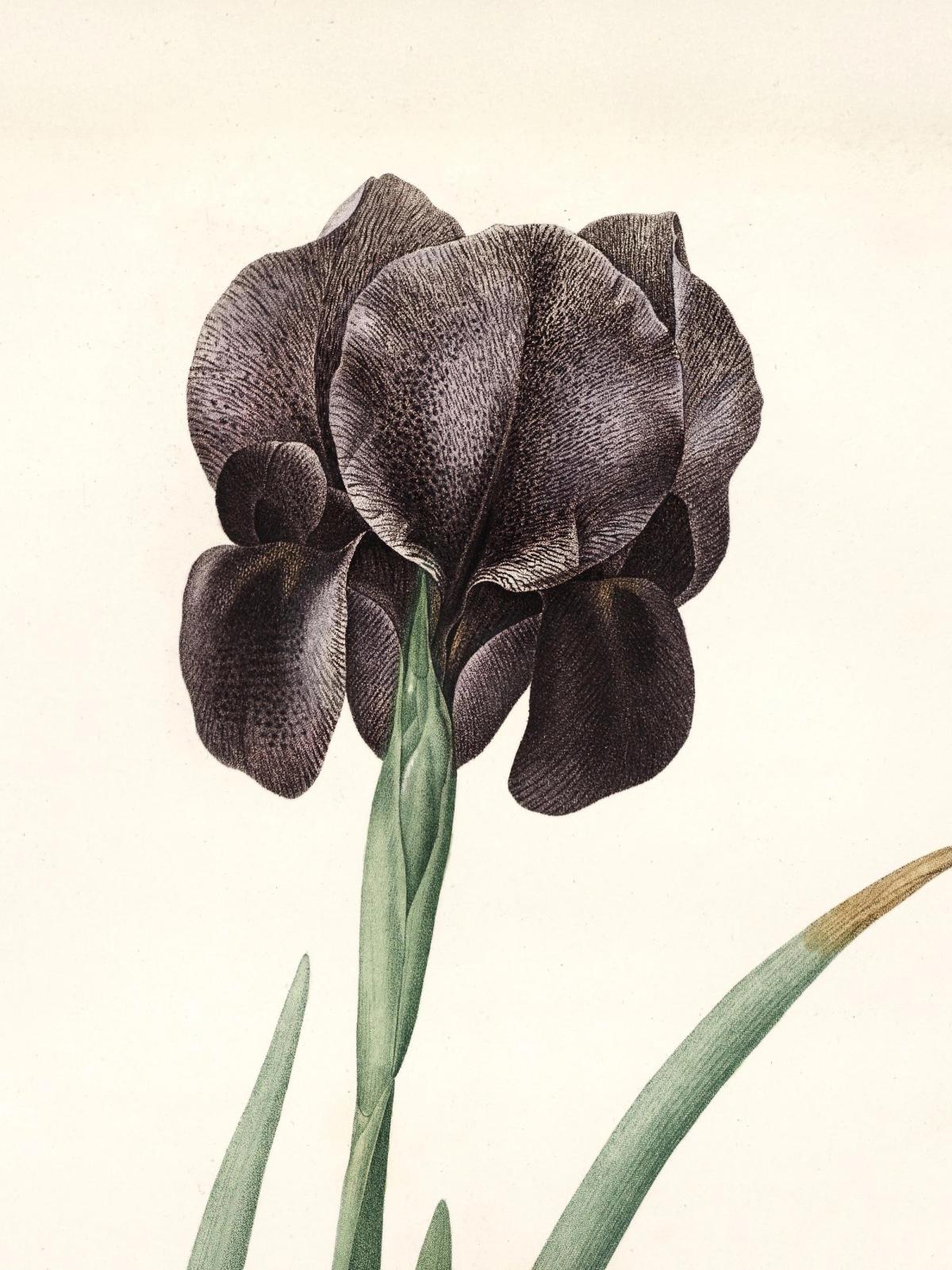
Iris Luxiana, Pierre-Joseph Redouté, Les Liliaceés, Vol. 1 [3]↓
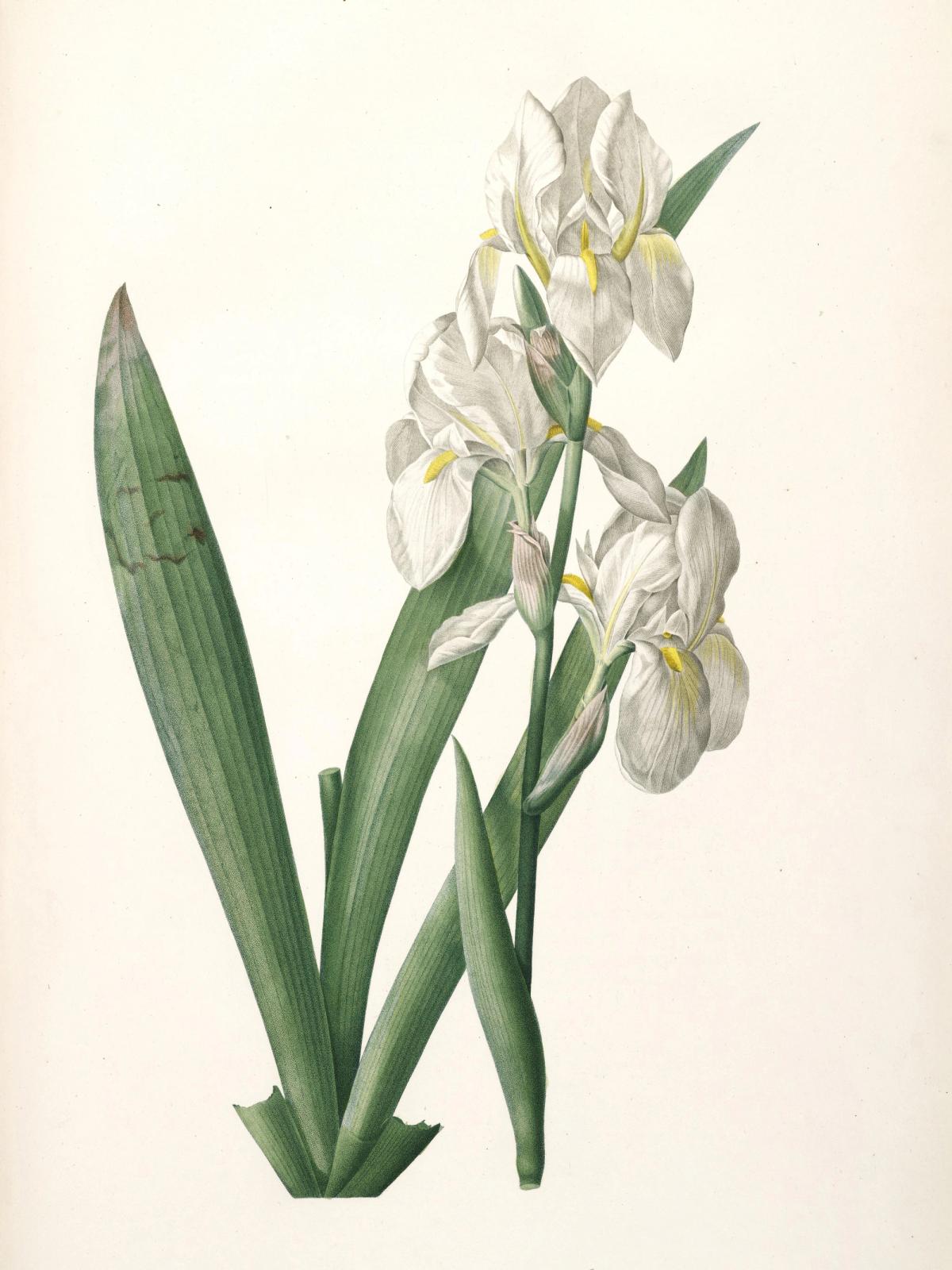
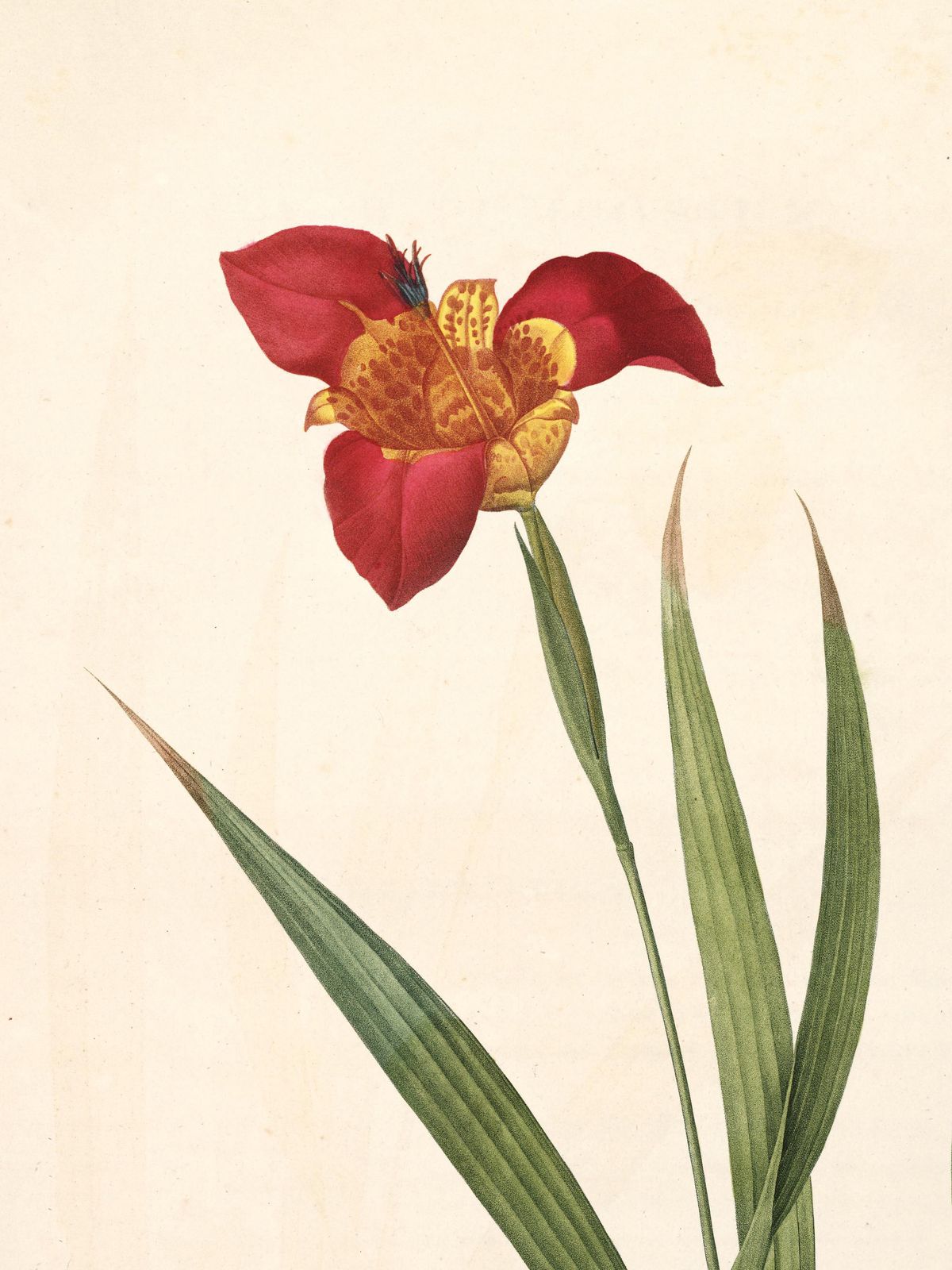
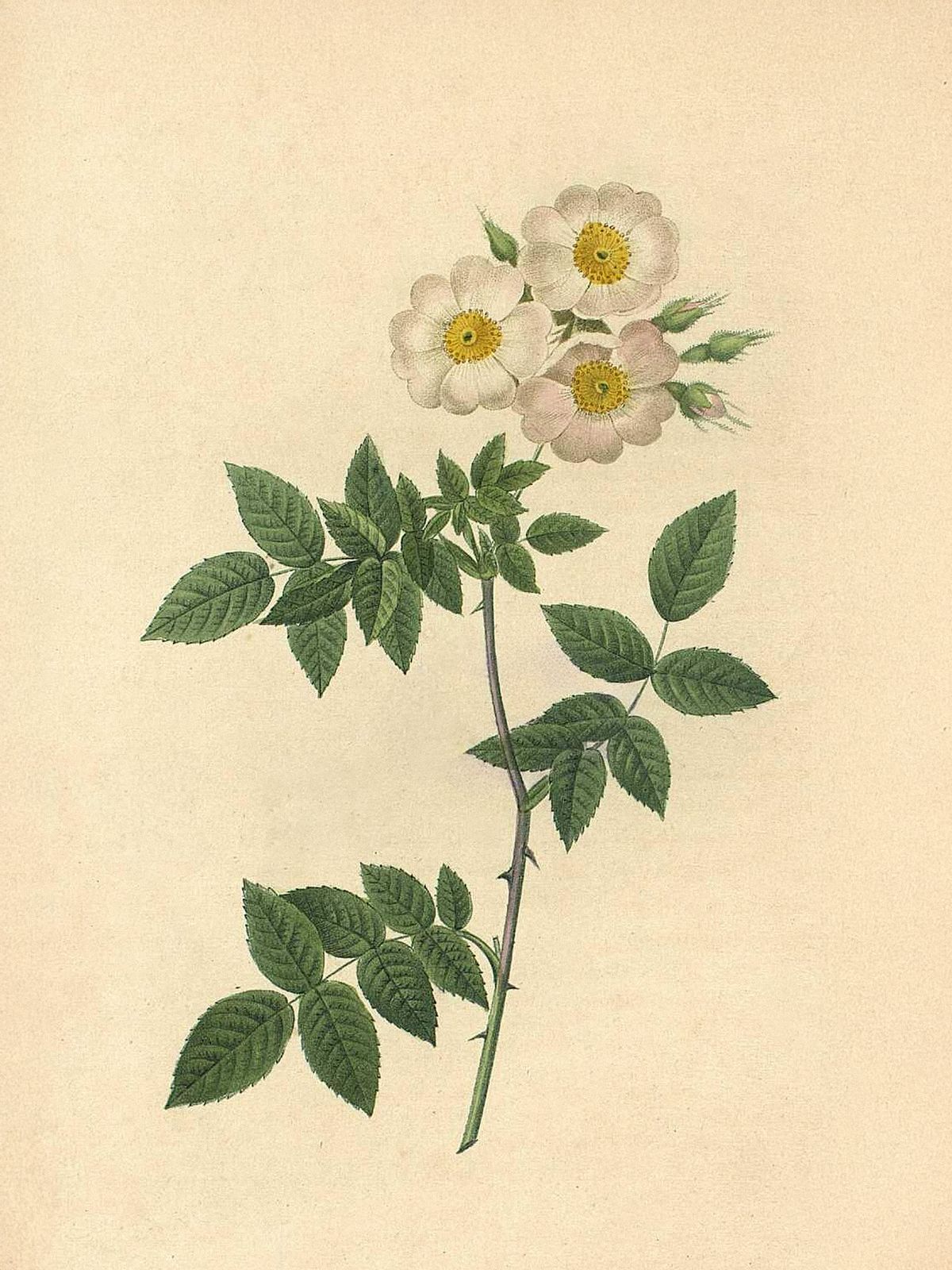
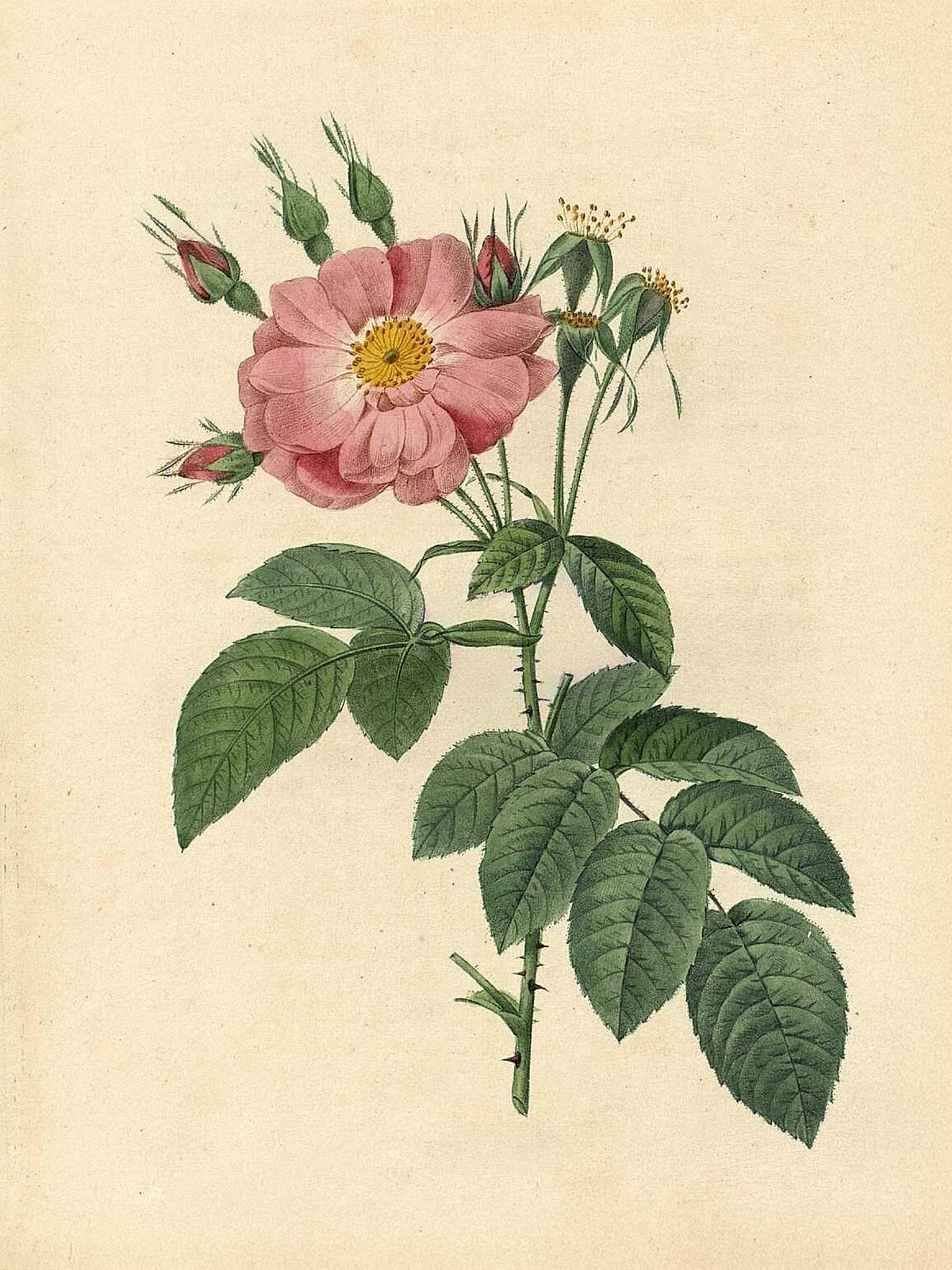
Les Roses, Redouté’s most celebrated work, comprises three volumes with 170 hand-colored stipple engravings depicting rose varieties from Empress Joséphine’s Malmaison gardens and Parisian collections, capturing hybrids and cultivars—many now extinct—with unparalleled elegance.
Distinct from his broader studies, Les Roses emphasizes the flower’s full, romantic form: single blossoms dominate each plate in near life-size, centered against minimal backgrounds to highlight petal curls, thorn spacing, and subtle veining, rather than complex multi-plant compositions. The drawings achieve heightened intimacy through glowing, dewy freshness—painted from cut flowers held at eye level—while Thory’s taxonomic text anchors their scientific precision.
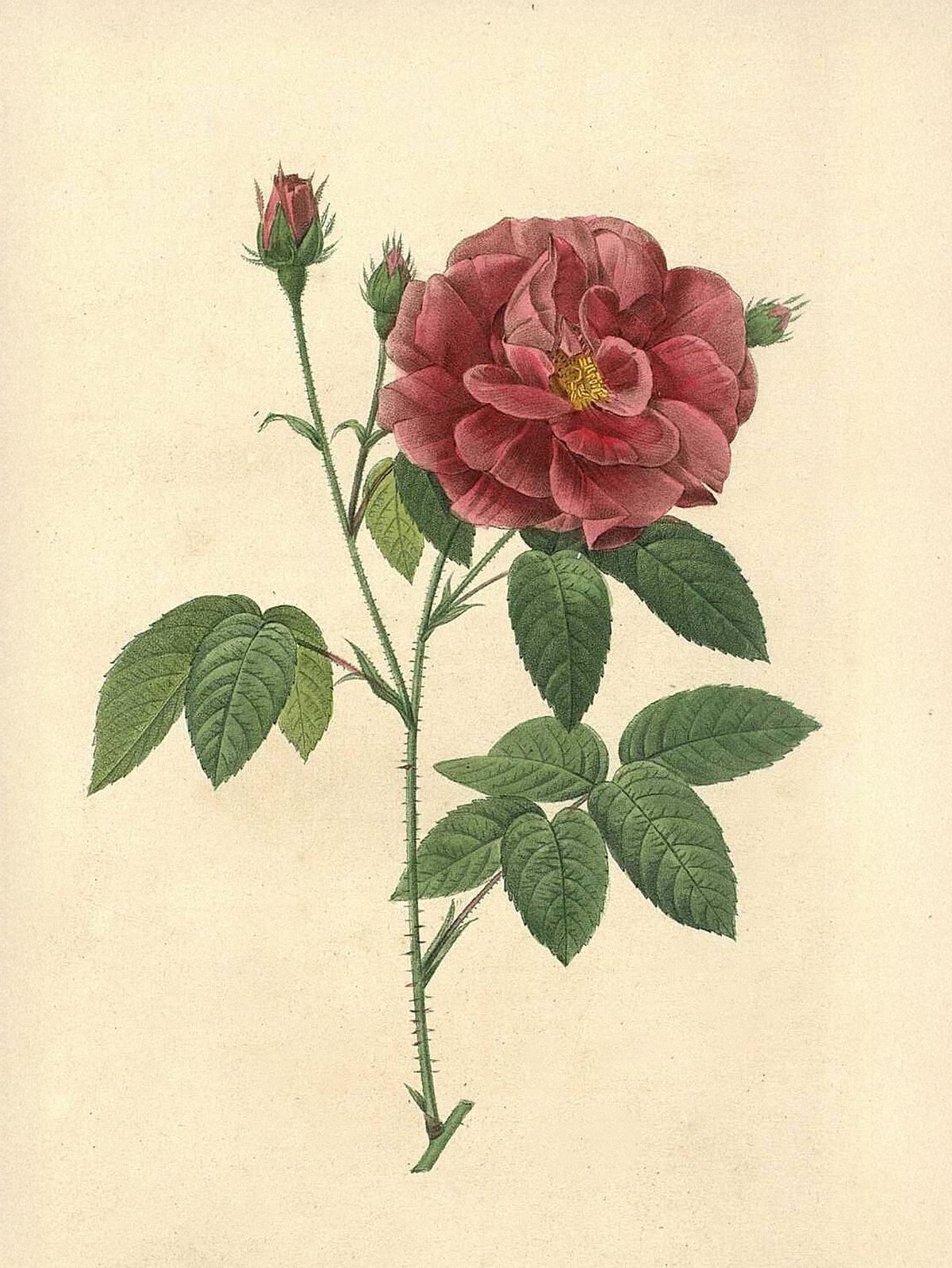
Gallica officinalis, Pierre-Joseph Redouté, Les Roses, Vol. 2 [4]↓
Sources
- [1] Plantarum historia succulentarum = Histoire des plantes grasses, 1799, Biodiversity Heritage Library[Link](accessed: 3/1/2026)↑
- [2] La botanique de J.J. Rousseau: ornée de soixante-cinq planches, imprimées en couleurs d’après les peintures de P.J. Redouté, 1805, Biodiversity Heritage Library[Link](accessed: 3/1/2026)↑
- [3] Pierre-Joseph Redouté, Les Liliaceés, Vol. 1, 1802, Biodiversity Heritage Library[Link](accessed: 3/1/2026)↑
- [4] Pierre-Joseph Redouté, Les Roses, Vol. 3, 1824, Real Jardin Botanico[Link](accessed: 3/1/2026)↑