Shadow print through light exposure
Cyanotype printing
Cyanotype printing is a contact photographic process invented by British astronomer Sir John Herschel in 1842, who discovered its potential while experimenting with light-sensitive chemicals for copying astronomical notes. Herschel combined ferric ammonium citrate (a light-sensitive iron compound) with potassium ferricyanide (which forms stable Prussian blue); upon UV exposure, the iron reduces and reacts to create an insoluble blue pigment in shadowed areas, while unexposed regions dissolve in a simple water rinse—no fixer or darkroom needed. This made cyanotype one of the first practical negative-positive photographic processes, far simpler than daguerreotypes or calotypes of the era.
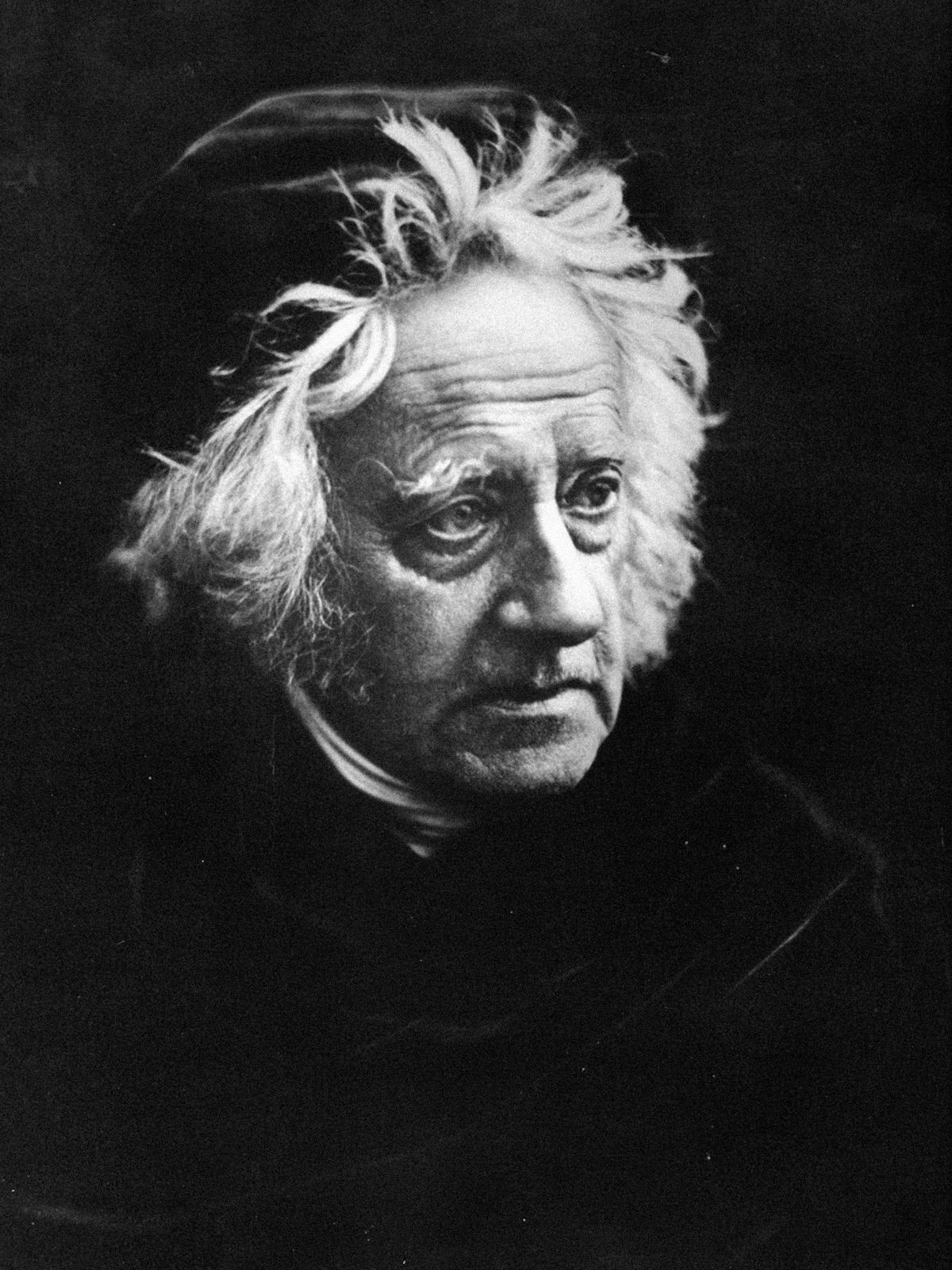
Herschel shared samples and the formula with his circle of scientific correspondents, including botanist Anna Atkins—a family friend whose husband had collaborated with Herschel’s father, William. Atkins immediately saw cyanotype’s value for botany: its contact nature preserved exact outlines without lenses or distortion, perfect for recording fragile algae or ferns.
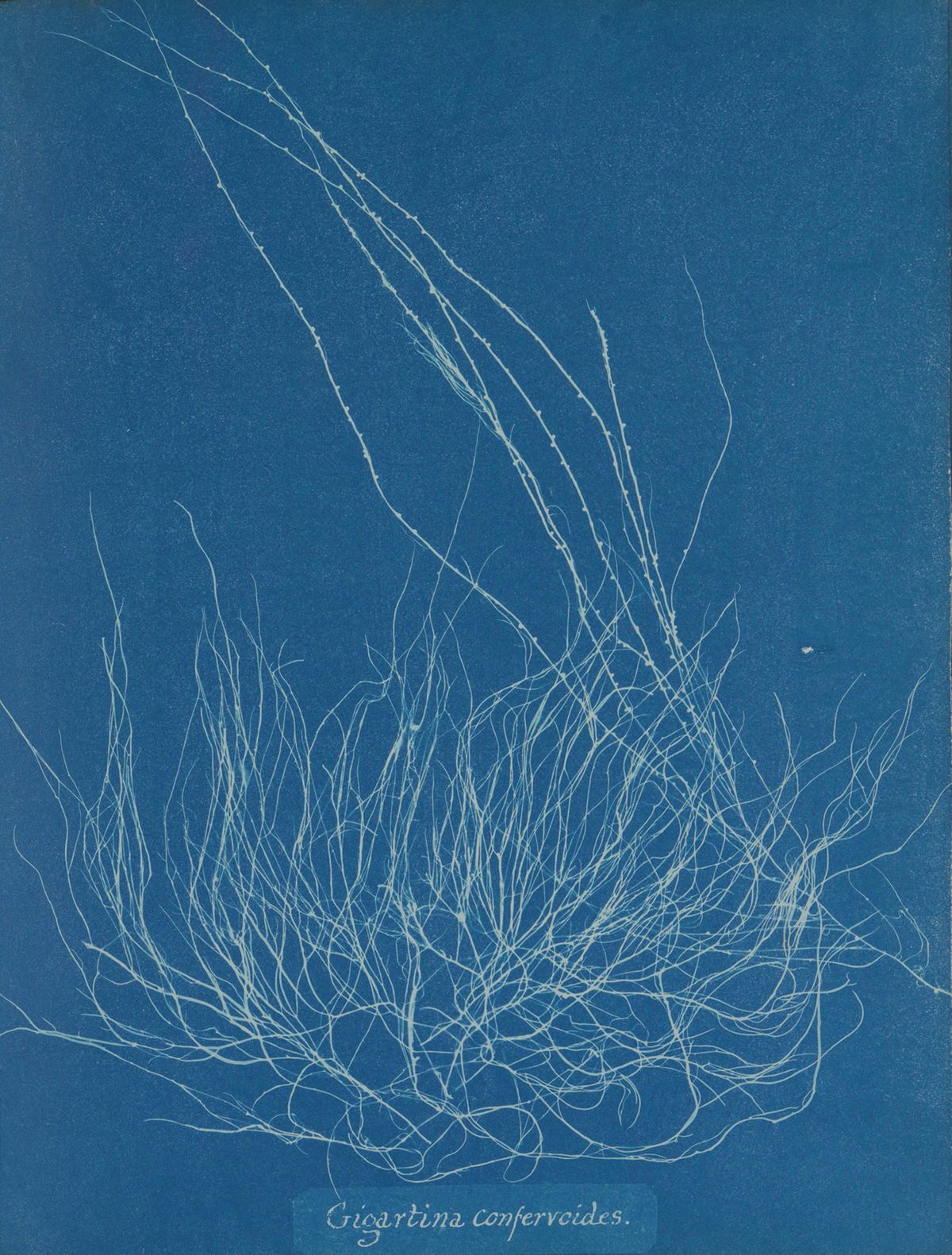
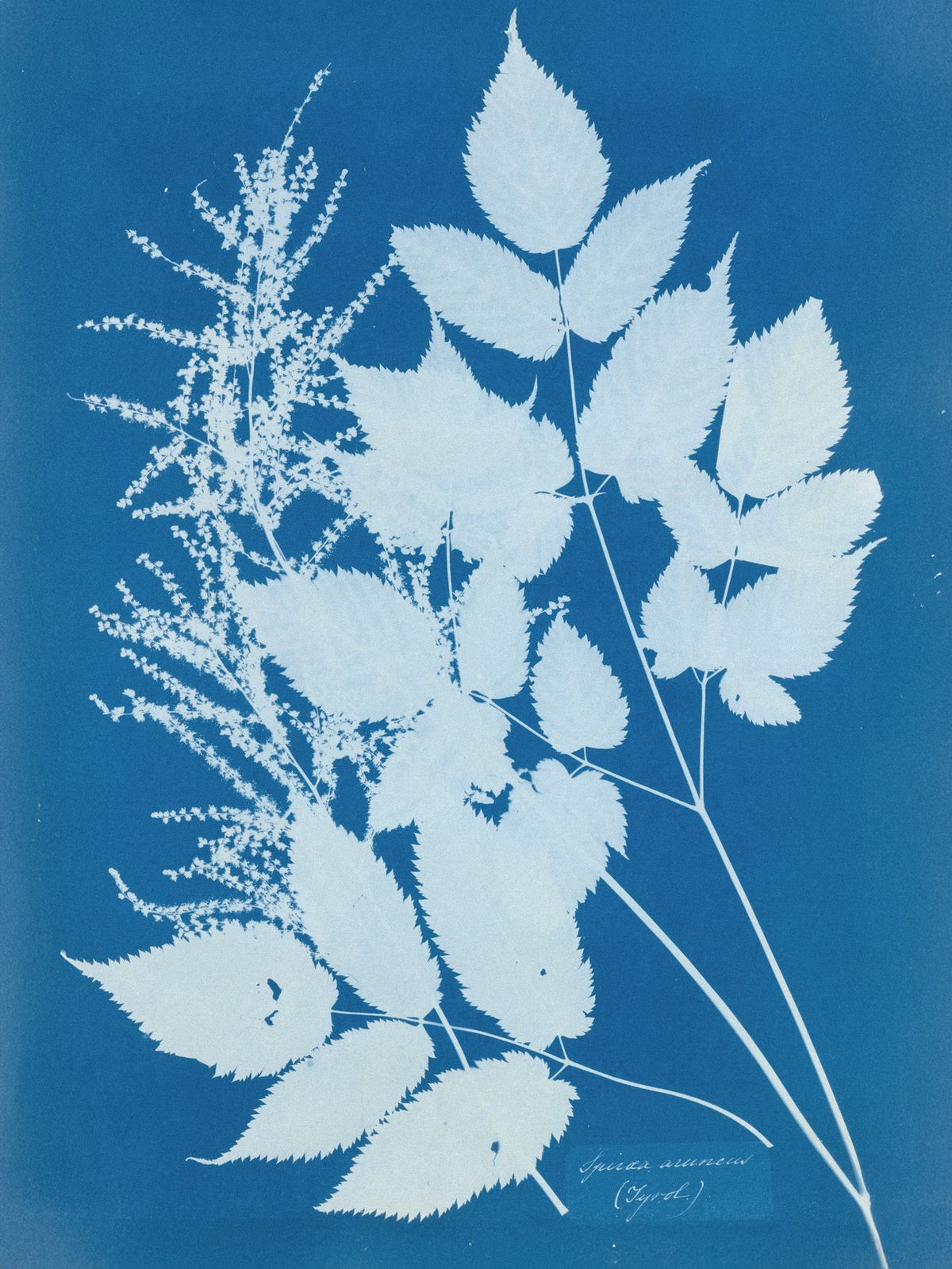
Atkins became the first person to publish a photographically illustrated book, self-producing British Algae: Cyanotype Impressions (1843–1853) with examples like Gicartina confervoides, where direct contact with specimens produced precise silhouettes via sunlight exposure and water rinse. She later applied it to flowering plants in Spirae aruncus (1851–1854), and Herbert B. Dobbie used it for ferns like Asplenium bulbiferum in New Zealand Ferns (1880).
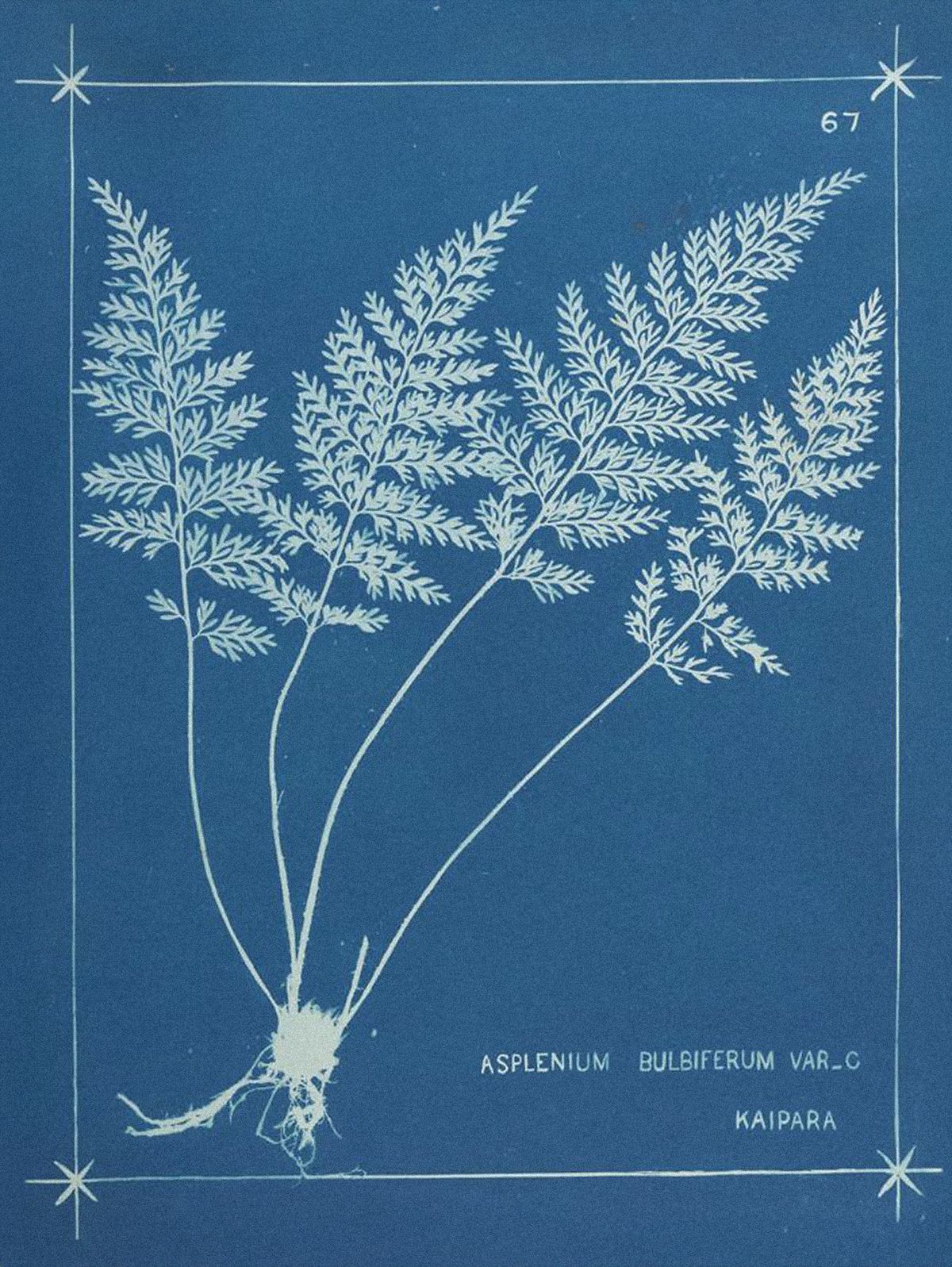
These works demonstrate cyanotype’s simplicity and reproducibility for botanical books. The contact process renders plant form as a graphic structural field, making branching, repetition, and proportion legible as both scientific record and visual design.