High-definition flatbed scanning
Black backdrop scan
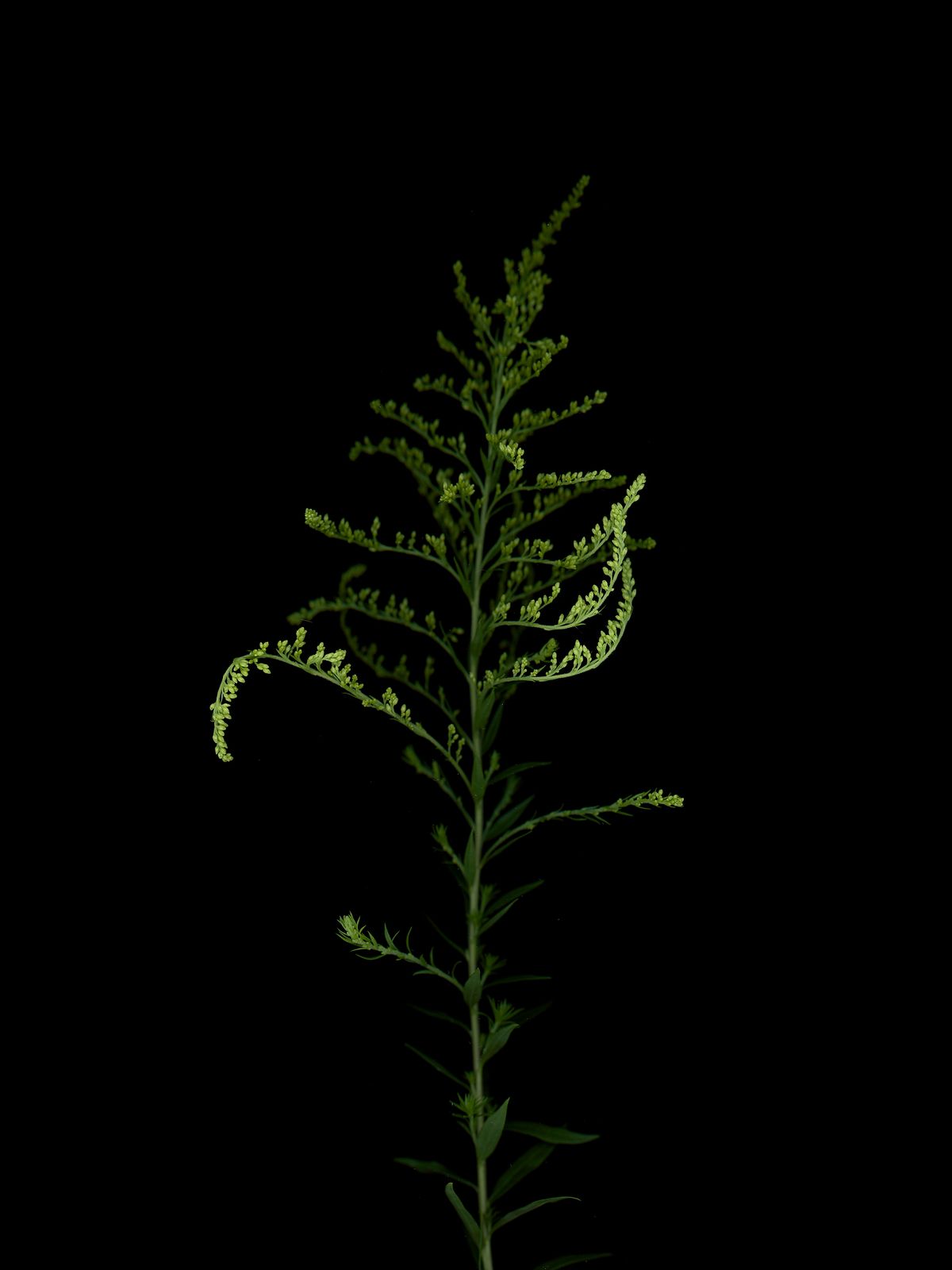
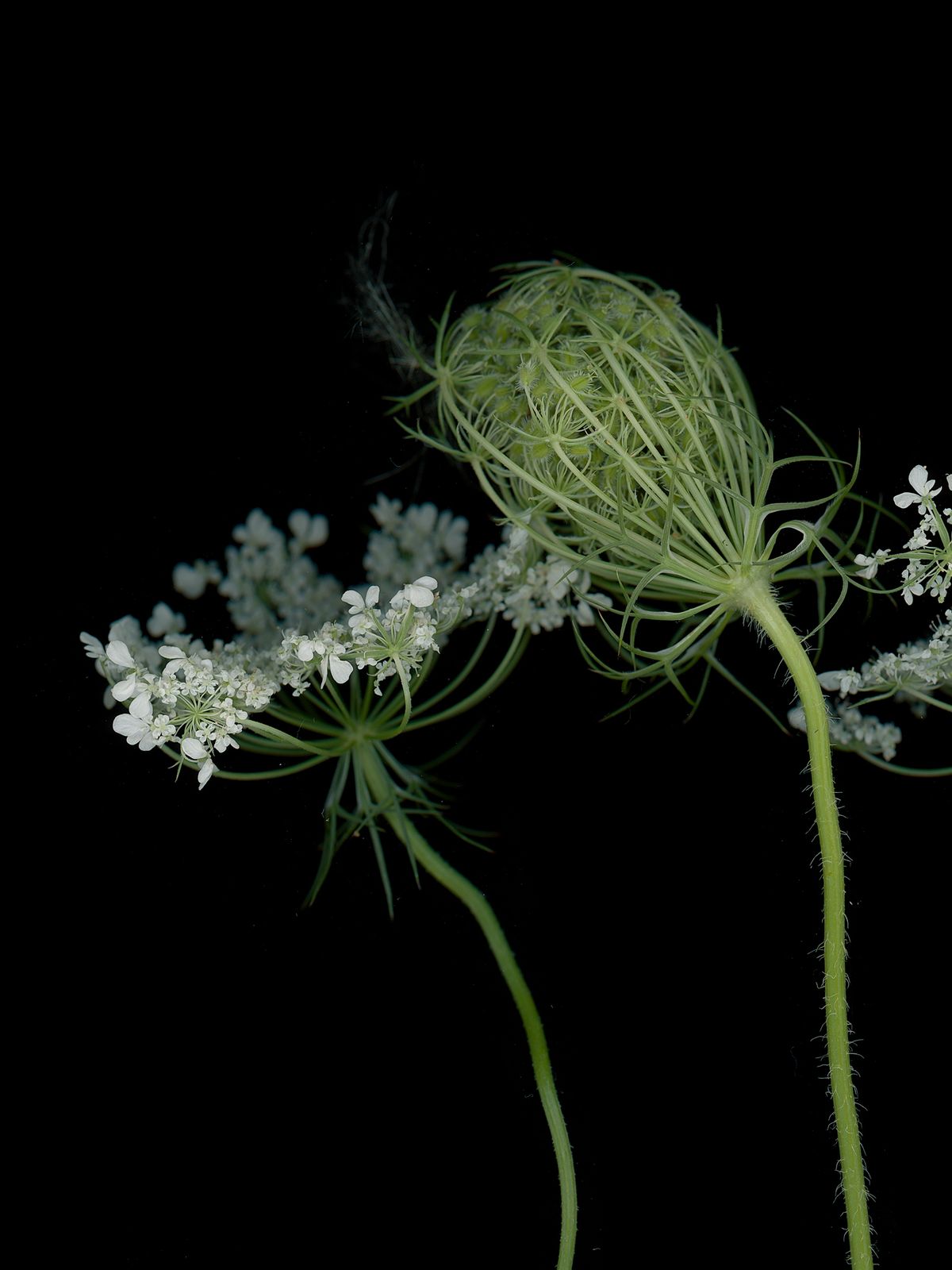
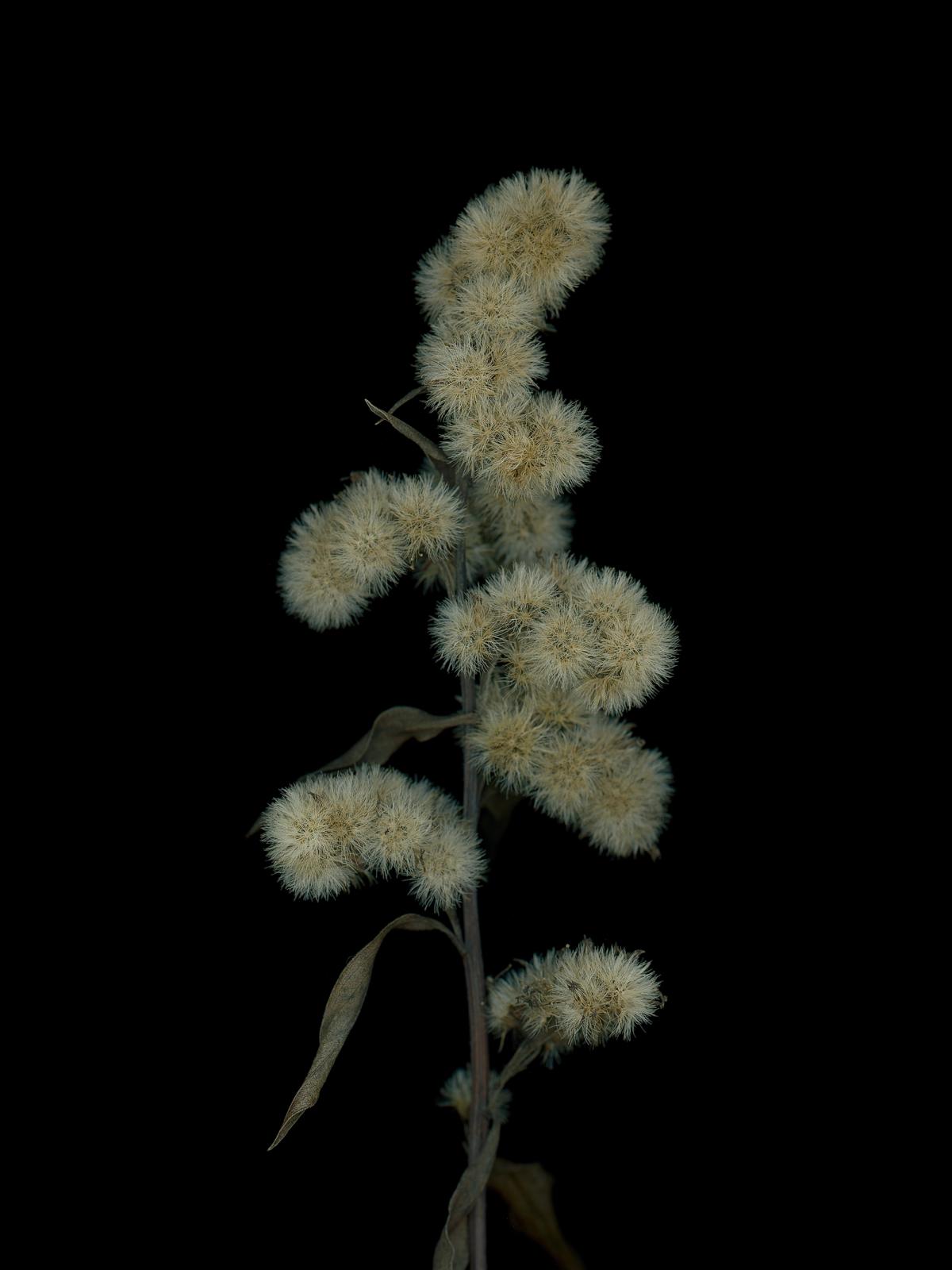
The Black Backdrop HD Scan uses a high-definition flatbed scanner to record fresh botanical specimens against a black background, with material placed directly on the scan bed to prioritize sharp focus on key structures. The scanner's light illuminates from below, capturing reflected light where contact points appear bright and precise, while elevated elements fade into controlled darkness, establishing a visual hierarchy of stems, leaves, and inflorescences.
Unlike pressing, which flattens and distorts three-dimensional form, this method preserves the specimen's natural structure intact—ideal for fragile or bulky material like umbels (Ammi majus) or nodding heads (Knautia arvensis) that cannot be pressed without damage. The black backdrop isolates morphology with precision, enhancing edge definition in campanulate corollas (Campanula rotundifolia) and plume-like panicles (Solidago virgaurea and altissima), while supporting both taxonomic study and design interpretation of growth patterns through light, distance, and material.